

Our Verdict
Condensation and groundwater seepage look similar on the surface but stem from fundamentally different causes. Getting the diagnosis right before spending money on repairs can save thousands of dollars. Most condensation issues are within a homeowner's DIY reach, while active seepage often warrants professional evaluation.
| Best for | Recommended |
|---|---|
| Homeowners dealing with foggy walls and dripping pipes in summer | Condensation management strategies |
| Homeowners finding wet spots after heavy rain or snowmelt | Seepage and drainage correction |
| Those unsure which moisture type they have | Foil tape diagnostic test first |
Why Getting the Diagnosis Right Matters
A wet basement is one of the most common homeowner complaints - but "wet" is not a single problem. Treating condensation with waterproofing membrane is like putting a cast on a sprain: you've addressed the wrong thing entirely. Before spending a dollar on repairs, it pays to understand what type of moisture you're actually dealing with.
The two main culprits are condensation (airborne water vapor turning to liquid when it contacts cold surfaces) and seepage (liquid groundwater or rainwater physically entering through the foundation). Both can leave walls looking damp and smelling musty, but they respond to completely different fixes. If you're uncertain about any of the terminology in this article, our glossary of home improvement terms covers foundational vocabulary that can help.
| Condensation | Seepage / Water Intrusion | |
|---|---|---|
| Primary cause | Warm, humid air meeting cold surfaces | Hydrostatic pressure or foundation cracks |
| When it appears | Hot, humid days or after showers/laundry | During or after rain, snowmelt, or spring thaw |
| Where moisture forms | On the surface of walls, pipes, and floors | Through cracks, joints, or porous masonry |
| Foil tape test result | Moisture on outer (room) side of foil | Moisture on inner (wall) side of foil |
| Typical DIY fix | Dehumidifier, better ventilation, pipe insulation | Improving grading, downspout extensions, gutter maintenance |
| When to call a pro | Persistent mold despite humidity control | Cracks wider than 1/4 inch, chronic flooding |
| Relative cost to address | Generally lower; mostly equipment and habits | Potentially higher; may require waterproofing systems |
Understanding Condensation
Condensation forms when warm, moisture-laden air meets a surface that's cool enough to drop it below the dew point - the temperature at which air can no longer hold its water vapor in gas form. Basement walls and floors are often significantly cooler than the air above, making them natural condensation magnets during humid summer months.
Common contributors include:
- Uninsulated cold-water pipes dripping in warm weather
- Inadequate ventilation (opening windows can make things worse if outdoor humidity is high)
- Laundry dryers venting indoors or into the basement
- High household humidity from cooking, showering, or large numbers of occupants
The good news is that most condensation problems are manageable without major construction. A properly sized dehumidifier, pipe insulation, and ensuring dryers vent to the outdoors address the majority of cases. Keep indoor relative humidity between 30% and 50% - an inexpensive hygrometer helps you monitor this.
Run the Foil Tape Test First
Cut a 12-inch square of aluminum foil and tape all four edges securely to a damp basement wall. Leave it in place for 24-48 hours. If moisture collects on the room-facing side, you have condensation. If it's wet on the wall-facing side, water is migrating through the wall itself. This low-cost test is the most reliable starting point before committing to any repair.
Understanding Seepage and Water Intrusion
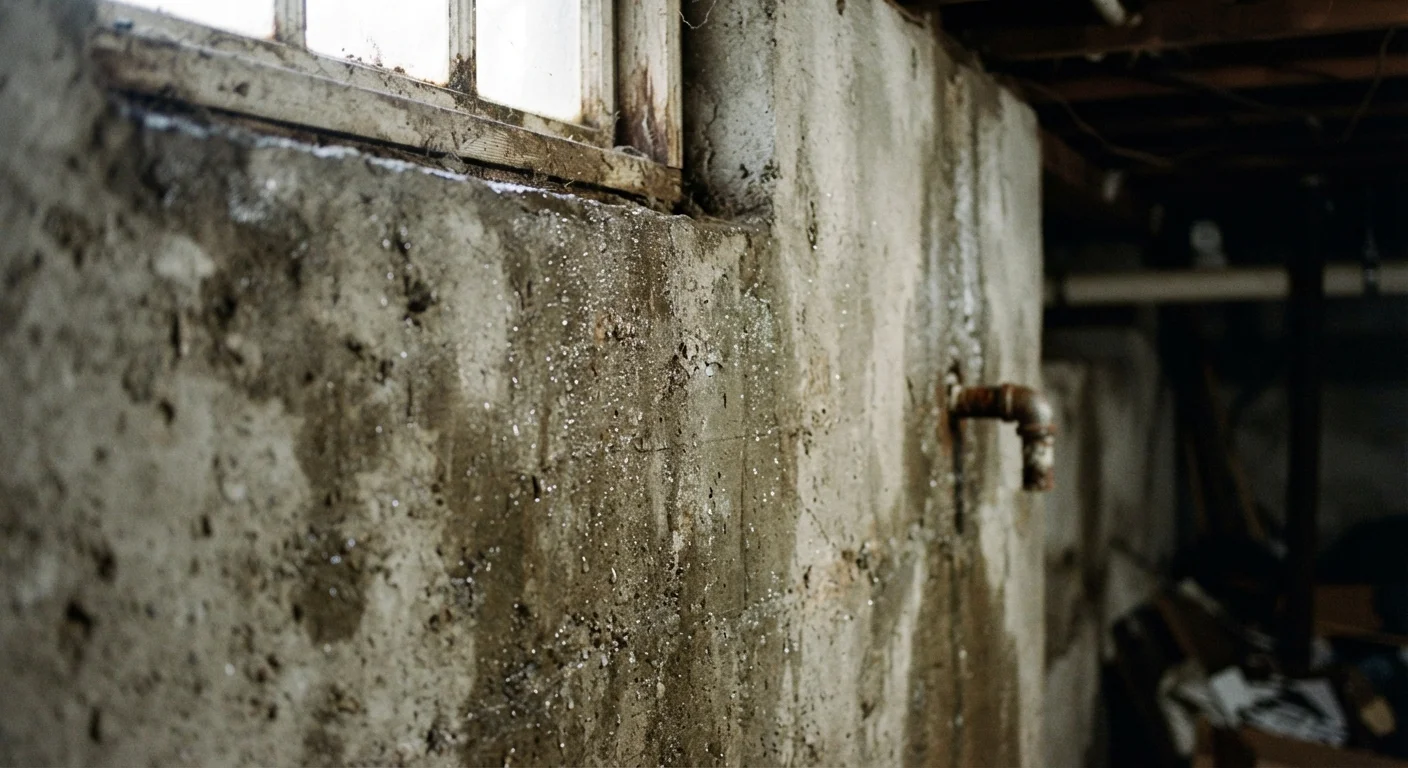
Seepage is liquid water physically pushing through or around your foundation. It's driven by hydrostatic pressure - the force that builds up when saturated soil presses against foundation walls. Seepage almost always correlates with weather events: you'll notice wet spots, puddles, or a white powdery mineral residue called efflorescence appearing during or after heavy rain, spring snowmelt, or periods of prolonged wet weather.
Entry points include:
- Cracks in poured concrete or block walls
- The cove joint where the floor meets the wall
- Porous concrete blocks absorbing water like a sponge
- Gaps around pipes or utility penetrations
The exterior environment is usually the root cause. Soil graded toward the house, downspouts that dump water right at the foundation, or clogged gutters that overflow next to the house all dramatically increase hydrostatic pressure. Our guide on gutter cleaning and inspection explains how to keep that exterior drainage system working properly - and it's often the most cost-effective first step before any interior work.
Don't Paint Over Active Seepage
Hydraulic cement and waterproofing paint can temporarily mask seepage, but they won't stop water that's entering under pressure. Painting over active leaks often traps moisture behind the surface, accelerating deterioration of the masonry and making eventual repairs more difficult and expensive. Fix the underlying drainage or pressure issue first.
Running the Foil Tape Test
If you're genuinely unsure which type of moisture you have - and many homeowners are - the foil tape test is the place to start. Tape a 12-inch square of aluminum foil flat against a damp section of wall, sealing all edges completely. Return after 24 to 48 hours:
- Moisture on the room-facing side: Condensation. The wall surface was cold enough to pull moisture from the air.
- Moisture on the wall-facing side: Seepage. Water is migrating through the masonry itself.
- Both sides wet: You may have a combination of both issues, which isn't uncommon in older homes.
Run this test during the season when your problem is worst - summer for condensation, rainy season or spring for seepage - to get the most accurate reading.
98%
Basements that experience some moisture
The American Society of Home Inspectors has reported that the vast majority of basements will experience water intrusion at some point.
~60%
Moisture cases linked to exterior drainage
Industry guidance consistently points to grading, gutters, and downspouts as the source of the majority of basement water problems.
Fixing Condensation vs. Fixing Seepage
Once you know what you're dealing with, you can focus your effort appropriately.
For Condensation
- Run a dehumidifier sized for the square footage of your basement
- Insulate cold-water pipes with foam pipe insulation
- Ensure clothes dryers vent completely outside
- Avoid storing materials that hold moisture (firewood, cardboard boxes) in large quantities
For Seepage
- Regrade soil so it slopes away from the foundation (at least 6 inches of drop over the first 10 feet)
- Extend downspouts at least 6 feet from the foundation
- Clean gutters regularly - our gutter maintenance guide walks through the process
- Seal small cracks with hydraulic cement as a temporary measure, but address drainage first
- For persistent or severe seepage, consult a licensed waterproofing contractor to evaluate interior drain tile systems or exterior waterproofing membrane
It's also worth noting that some persistent moisture problems overlap with broader home maintenance mistakes - our piece on home maintenance myths covers a few common misconceptions about waterproofing that can lead homeowners in the wrong direction.
Work requiring structural evaluation, underpinning, or significant foundation repair should always be assessed by a licensed professional. Some repairs may also require permits - verify local building code requirements before beginning any substantial foundation work.
The content provided on our blog site traverses numerous categories, offering readers valuable and practical information. Readers can use the editorial team’s research and data to gain more insights into their topics of interest. However, they are requested not to treat the articles as conclusive. The website team cannot be held responsible for differences in data or inaccuracies found across other platforms. Please also note that the site might also miss out on various schemes and offers available that the readers may find more beneficial than the ones we cover.