

Why ROI Thinking Matters Before You Renovate
Most homeowners renovate for two reasons: to enjoy their home more right now, or to build value they'll cash in when they sell. Both are valid goals - but they require different decisions. A spa-like master bathroom might bring daily joy with modest resale return, while replacing worn siding might feel unglamorous but significantly boost your home's appraised value.
Understanding ROI before you start a project helps you prioritize your budget, avoid over-spending, and set realistic expectations. It also keeps you from falling into the common trap of over-improving for your neighborhood - pouring $80,000 into renovations when your street's comparable homes sell for $250,000 will likely limit how much of that investment you recover. For a broader financial lens on home spending, it helps to think about home improvement within your overall savings and debt management strategy.
~102%
Typical ROI for garage door replacement
Industry cost-vs-value analyses have repeatedly found garage door replacement to be among the few projects that can recoup or exceed its cost at resale in many US markets.
50-75%
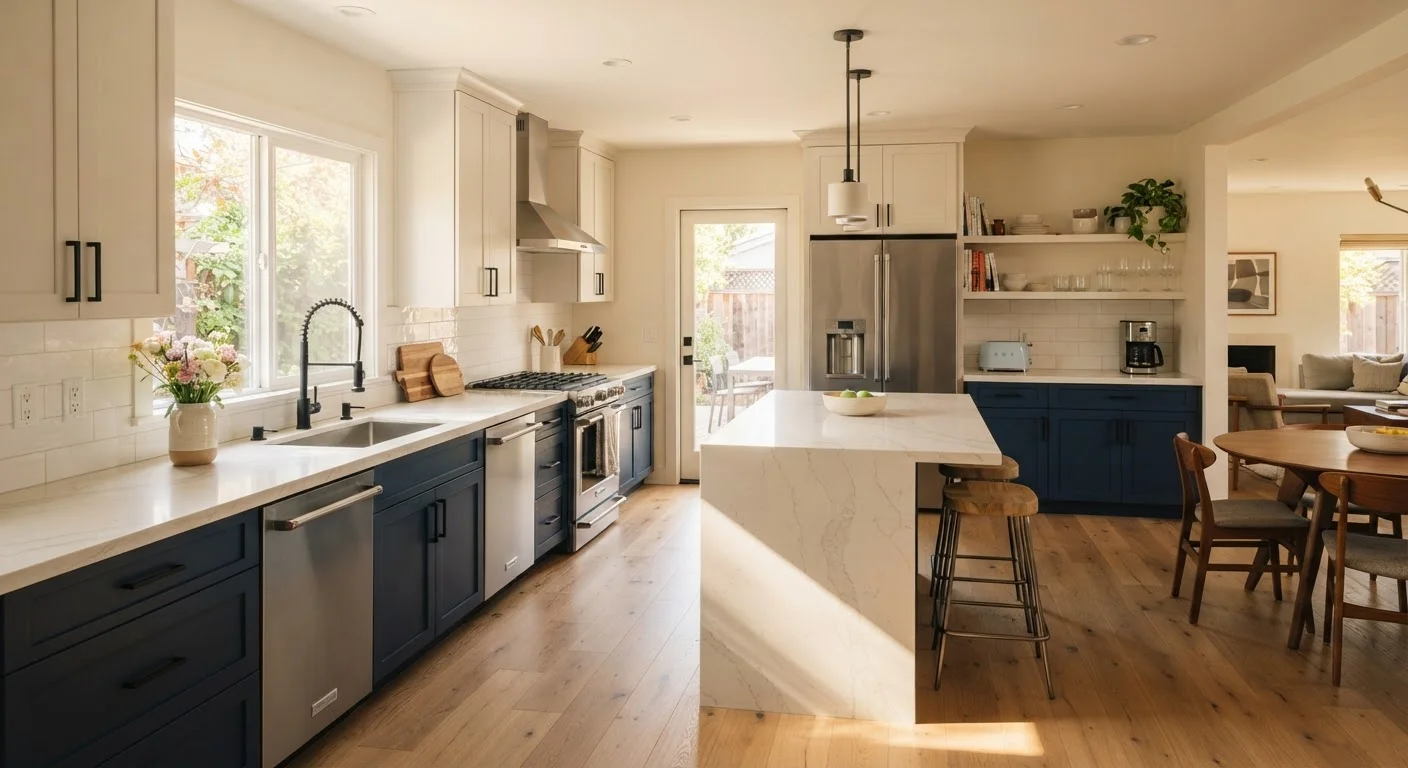
Typical ROI for major kitchen remodel
Full kitchen renovations tend to recoup roughly half to three-quarters of their cost, depending on project scope, quality, and local market conditions.
Top 3
Most impactful curb appeal factors for buyers
Real estate research consistently identifies landscaping, exterior paint condition, and the front entry as the top three curb appeal elements influencing buyer first impressions.
High-ROI Projects Worth Prioritizing
Certain improvements reliably deliver strong returns across most US markets. These tend to be exterior-focused, functional, or cosmetically impactful without being highly personalized.
- Garage door replacement: One of the consistently top-ranked projects for ROI. A new door improves curb appeal, security, and energy efficiency - and buyers notice it immediately.
- Entry door replacement: A new steel front door is relatively low-cost and signals a well-maintained home. First impressions shape buyer perception before they step inside.
- Manufactured stone veneer: Replacing a portion of standard siding with stone veneer can dramatically improve curb appeal at a manageable cost.
- Minor kitchen updates: Replacing cabinet hardware, repainting cabinets, and installing new faucets cost far less than a full remodel but freshen the space buyers care about most. See our kitchen renovation guide to plan updates at the right scale.
- Attic insulation: Functional and invisible, added insulation improves energy efficiency and is attractive to buyers thinking about utility costs. It's also one of the few improvements that lowers your bills while you still live there.
Match Your Improvement to Your Timeline
If you plan to sell within a year or two, focus on projects with the fastest, most visible impact: fresh exterior paint, landscaping cleanup, and minor kitchen or bath updates. If you plan to stay for a decade, energy-efficiency upgrades and functional improvements have more time to pay back in both comfort and value. Knowing your timeline shapes which investments actually make sense.
Projects That Rarely Recoup Their Full Cost
Some improvements are worth doing for comfort or functionality, but homeowners should enter them without expecting a full return at resale.
- Major kitchen or bathroom gut remodels: Full renovations often recoup only half to two-thirds of their cost. If the existing layout and fixtures are functional, a refresh beats a full replacement for ROI purposes.
- Swimming pools: In warm-climate markets, pools can add appeal. In most of the country, they add maintenance cost and can actually narrow your buyer pool - many families with young children, older buyers, or pet owners actively avoid homes with pools.
- Sunrooms and room additions: Adding square footage sounds appealing, but the construction cost per square foot typically exceeds the value added per square foot in most markets.
- Highly customized finishes: Bold design choices - unusual tile patterns, bespoke built-ins, niche color palettes - reflect personal taste that buyers may not share, requiring them to factor in the cost of changing it.
That doesn't mean you should never do these projects. It means you should do them because you want to live with them - not as a financial investment. Our guide on managing a home renovation can help you keep any project on budget and in scope.
The Hidden Value of Maintenance and Functional Upgrades
Buyers and appraisers pay close attention to a home's condition. A house with a new roof, updated electrical panel, and working HVAC will almost always command more than a comparable home with deferred maintenance - even if the latter has a beautiful new kitchen.
Functional upgrades protect existing value rather than creating new value from scratch. Think of them as your defensive investment: replacing an aging water heater, re-sealing the driveway, maintaining the gutters. None of these make for exciting renovation stories, but neglecting them can cost you significantly when buyers request a price reduction after inspection. For a reality check on what maintenance habits actually protect your home's value, see our piece on home maintenance myths.
If you're not ready for a major project, manageable weekend improvements can address small issues and refresh your home's appearance without a large outlay.
Frequently Asked Questions
Garage door replacements, new steel entry doors, and manufactured stone veneer consistently rank among the highest-ROI projects in industry cost-vs-value studies, often recouping 90% or more of their cost. Curb appeal projects tend to outperform interior renovations on a pure ROI basis.
A finished basement typically adds usable square footage and can attract buyers, but it rarely recoups its full cost at resale. Returns depend heavily on your local market, the quality of the finish, and whether the space meets code requirements. See our guide on <a href="/home-garden/home-improvement/attic-conversions-basement-finishes-and-garage-adus-adding-space-without-moving">adding space without moving</a> for a fuller breakdown.
Minor kitchen updates - new hardware, fresh paint, updated fixtures - tend to offer stronger ROI than full gut remodels. Major kitchen renovations often recoup only 50-70% of their cost, though they can help a home sell faster in competitive markets.
Highly personalized upgrades (bold custom tile, elaborate built-ins), luxury pools in moderate-climate markets, and sunroom additions frequently fail to recoup their costs. Improvements that put your home well above neighborhood price norms also tend to underperform.
It depends on the scope and your timeline. Small cosmetic fixes - fresh paint, clean landscaping, updated lighting - generally offer good returns for the effort. Major renovations started shortly before listing rarely recoup their full cost and can delay your sale.
Energy-efficient upgrades like added insulation, new windows, and modern HVAC systems can improve appraisal values and appeal to cost-conscious buyers. Their ROI varies, but they also reduce utility costs while you still live in the home. Learn more in our <a href="/home-garden/home-improvement/energy-efficiency-upgrades-that-pay-for-themselves-over-time">energy efficiency upgrades guide</a>.
The content provided on our blog site traverses numerous categories, offering readers valuable and practical information. Readers can use the editorial team’s research and data to gain more insights into their topics of interest. However, they are requested not to treat the articles as conclusive. The website team cannot be held responsible for differences in data or inaccuracies found across other platforms. Please also note that the site might also miss out on various schemes and offers available that the readers may find more beneficial than the ones we cover.