

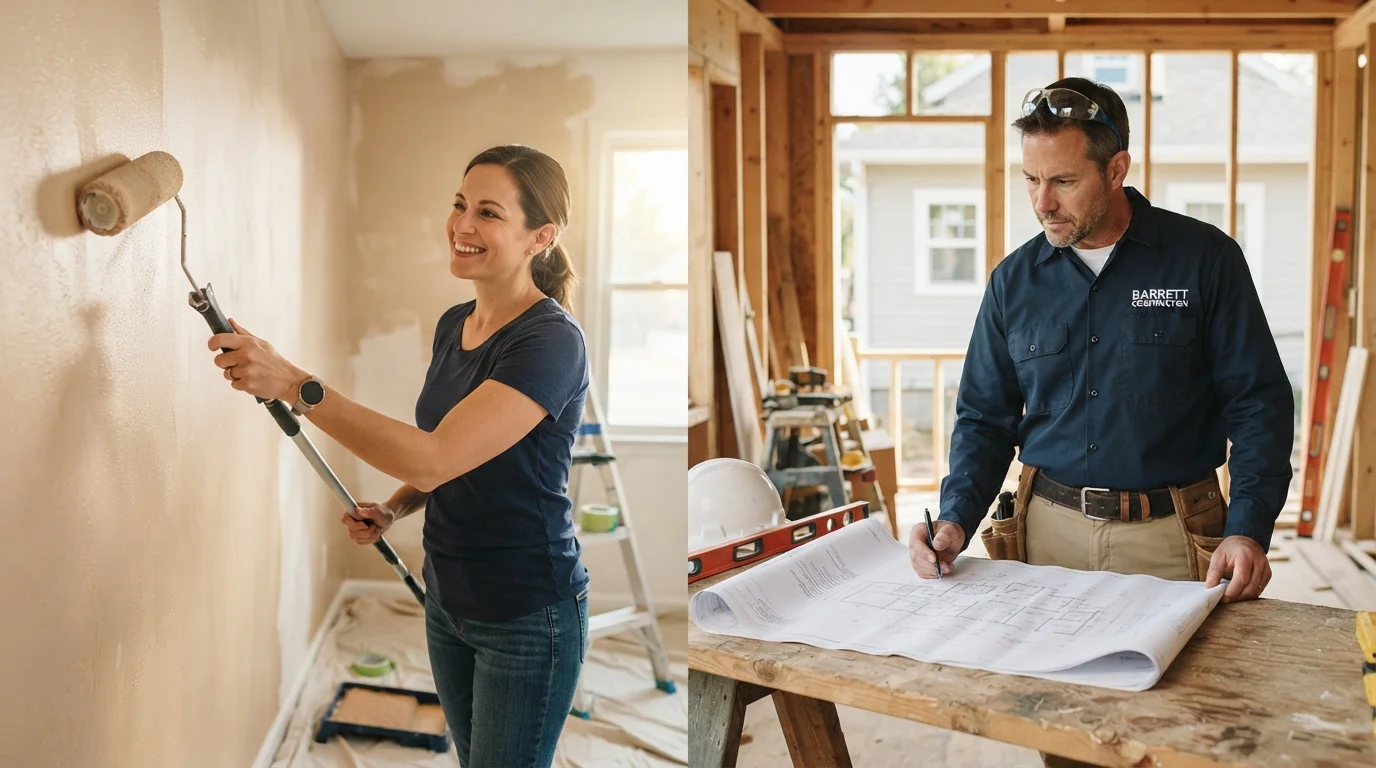
Option A
DIY (Do It Yourself)
The hands-on, cost-conscious approach for capable homeowners.
Best for: Straightforward tasks with low safety risk, clear instructions, and forgiving timelines.
Option B
Hiring a Pro
The licensed, experienced option for complex or regulated work.
Best for: Projects involving electrical, structural, gas, or permit-required work where safety and code compliance matter most.
The Core Question: Risk, Complexity, and Regulation
Every home project sits somewhere on a spectrum from simple to serious. Before picking up a tool or calling a contractor, ask three foundational questions: How dangerous is this if done wrong? How technically complex is it? And does local code require licensed work?
Tasks like painting rooms, installing a ceiling fan on an existing circuit, or replacing a faucet are low-risk and widely documented. A homeowner with basic tool competence and patience can handle them confidently. But projects touching your home's structural integrity, main electrical panel, gas supply, or load-bearing framework belong in a different category entirely - not because pros are gatekeeping, but because the consequences of errors are serious and often hidden inside walls for years.
Regulations matter too. Many jurisdictions require permits and licensed contractors for electrical, plumbing, HVAC, and structural work. See our guide to when permits are legally required to understand what triggers an approval requirement in common home improvement projects. Skipping a required permit can create real problems at resale or during an insurance claim.
| Criterion | DIY | Hiring a Pro |
|---|---|---|
| Upfront cost | Lower (labor is free) | Higher (labor + markup) |
| Risk of costly mistakes | Higher without experience | Lower with licensed work |
| Code compliance | Homeowner's responsibility | Contractor manages permits |
| Insurance coverage | May not be covered | Contractor carries liability |
| Time investment | High - your hours | Low - your oversight only |
| Best project type | Cosmetic, low-risk tasks | Structural, regulated systems |
| Skill requirement | Basic to intermediate | Professional trade level |
Where DIY Genuinely Makes Sense
The sweet spot for DIY is cosmetic and maintenance work with a clear process, widely available materials, and a low cost of failure. Examples include interior painting, patching drywall, caulking windows and tubs, installing pre-hung interior doors, laying laminate flooring, refreshing landscaping and garden beds, and basic appliance swaps like replacing a toilet fill valve or a dishwasher supply line.
What makes these projects DIY-friendly isn't just that they're "simple" - it's that mistakes are recoverable. A crooked tile row can be redone. A poorly caulked seam can be scraped and reapplied. The financial stakes of a misstep are manageable, and the skills required build intuitively from one project to the next.
Honest self-assessment is key. Ask yourself: Have I done anything similar before? Do I have the right tools, or would renting them make this viable? Is my timeline flexible if this takes longer than expected? If the answers lean toward yes, DIY is a reasonable path. Our home maintenance hub covers a wide range of tasks sized for capable homeowners.
35%
DIY projects requiring professional correction
Industry estimates suggest roughly a third of DIY home projects eventually require a professional to fix errors, often costing more than an original hire would have.
~$50-$100/hr
Typical licensed contractor labor rate
Rates vary significantly by trade, region, and project complexity; always obtain multiple bids before committing to a contractor.
3 in 10
Homeowners who skipped a required permit
Surveys of US homeowners suggest a notable share have completed regulated work without pulling a permit, a gap that can surface during home sales and inspections.
When Hiring a Pro Is the Smarter Move
Certain projects carry consequences that outweigh any labor savings. Electrical panel upgrades, rewiring, gas line installation or repair, structural modifications (removing walls, adding beams), roofing on pitched surfaces, and significant plumbing work that connects to your main supply or drain lines all fall into this category.
Beyond safety, consider the warranty and liability implications. Licensed contractors carry insurance. If a pro's work causes water damage or a fire, their liability coverage provides recourse. If your own DIY work causes a similar problem, your homeowner's insurance may not cover it - and you're solely responsible for the outcome.
Hiring a pro also makes sense when a project's complexity exceeds your bandwidth. A full kitchen remodel, for example, involves sequencing electrical, plumbing, cabinetry, and finish work across weeks. Managing that yourself while working a full-time job is a different challenge than the project itself. See our practical guide to managing renovations for what that coordination actually involves.
When you do hire, vet carefully. Our contractor vetting checklist covers the key questions to ask before work begins, and our guide to reading contractor bids helps you evaluate estimates without getting lost in the numbers.
The Hybrid Approach: Splitting the Work Strategically
Not every project is all-or-nothing. Many homeowners save meaningfully by handling preparation, demolition, cleanup, or finish work themselves while hiring pros for the regulated or technically demanding phases. This approach - sometimes called a hybrid or sweat-equity model - keeps code-required work in licensed hands while reducing overall labor costs.
For example, you might demo a bathroom yourself, hire a licensed plumber for rough-in work, and then handle the tile, vanity install, and paint once plumbing inspection passes. Similarly, you could prep and prime walls before a painter arrives, or handle landscaping after a fence contractor finishes the structural posts.
The key is communicating this arrangement upfront with your contractor. Some pros welcome it; others prefer to control all phases for quality and liability reasons. Either position is reasonable - just clarify expectations before work starts to avoid friction or scope disputes mid-project. For specific plumbing scenarios, our guide to plumber vs. DIY for water problems offers a practical breakdown of what's typically safe to handle yourself.
The content provided on our blog site traverses numerous categories, offering readers valuable and practical information. Readers can use the editorial team’s research and data to gain more insights into their topics of interest. However, they are requested not to treat the articles as conclusive. The website team cannot be held responsible for differences in data or inaccuracies found across other platforms. Please also note that the site might also miss out on various schemes and offers available that the readers may find more beneficial than the ones we cover.