

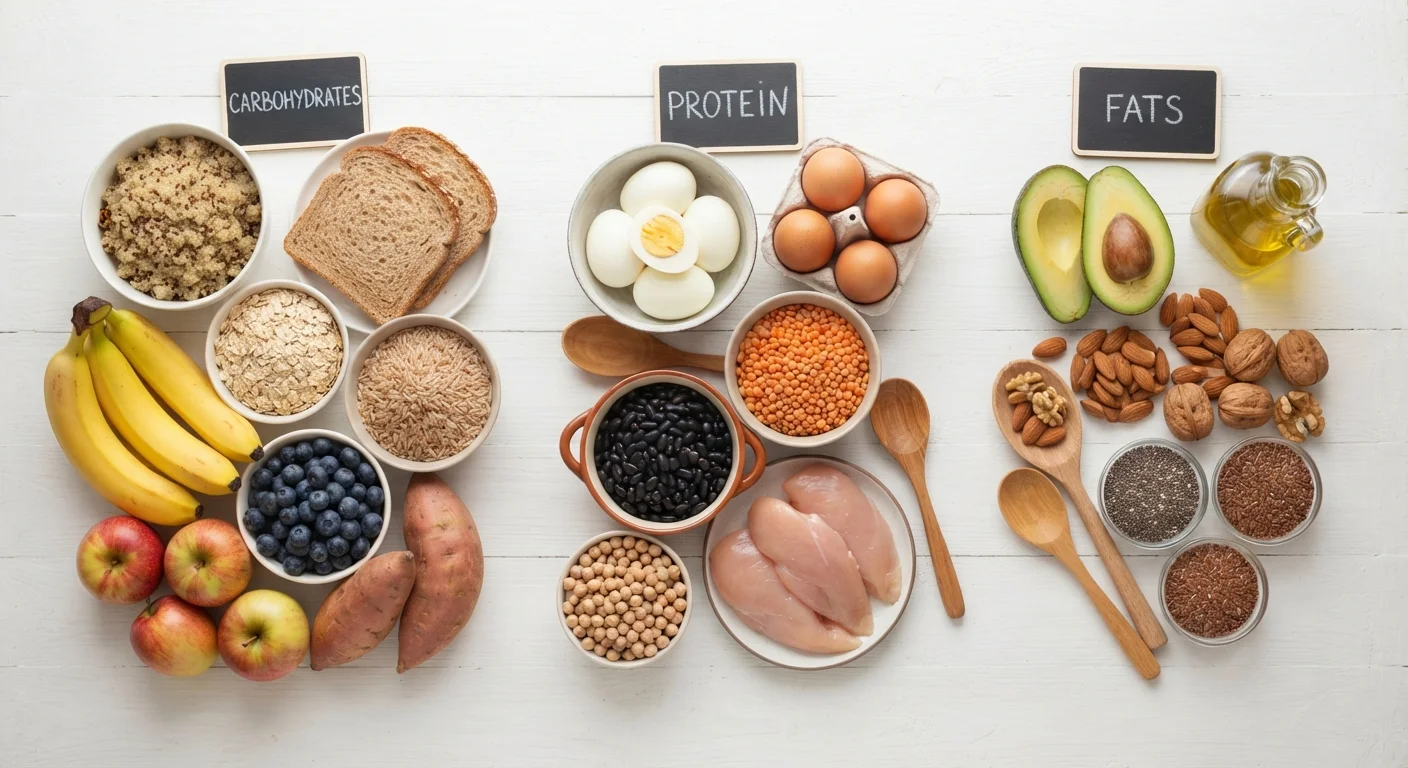
Why Macronutrients Matter
Pick up any nutrition label and you will see three numbers that dwarf everything else: total carbohydrate, protein, and fat. These are your macronutrients - the nutrients your body burns for fuel, uses to build tissue, and relies on to keep virtually every system running. Unlike the vitamins and minerals your body quietly depends on, macronutrients are needed in meaningful quantities at every meal.
Understanding what each one does - rather than labeling any of them as "good" or "bad" - is one of the most practical steps you can take toward making confident food choices. Misconceptions about macronutrients are also remarkably common, as explored in our look at nutrition myths that refuse to die.
Carbohydrates: Your Body's Preferred Fuel
Carbohydrates are the body's fastest and most efficient energy source. When digested, they break down into glucose, which cells - especially brain cells - use immediately for energy. Excess glucose is stored in the liver and muscles as glycogen, ready to be released between meals or during exercise.
Not all carbohydrates behave the same way. Refined carbohydrates (white bread, sugary drinks) are digested quickly, producing rapid shifts in blood sugar. Whole-food sources - oats, beans, vegetables, fruit - release glucose more gradually and also deliver fiber, which carries its own set of benefits. Our article on how fiber works in the body explores this in depth.
Choose Carb Quality, Not Just Quantity
The quality of carbohydrate sources matters enormously. Choosing whole grains, legumes, and vegetables over heavily refined options delivers the same fuel alongside fiber, vitamins, and minerals. This simple shift tends to have a meaningful impact on how satisfied and energized you feel throughout the day.
The quality of carbohydrate sources matters enormously. Choosing whole grains, legumes, and vegetables over heavily refined options delivers the same fuel alongside fiber, vitamins, and minerals.
Protein: Builder, Repairer, Regulator
Protein is made up of chains of amino acids - often called the building blocks of the body. Your body uses them to build and repair muscle tissue, produce enzymes and hormones, support immune function, and transport molecules through the bloodstream. Of the 20 amino acids the body uses, nine are called "essential" because the body cannot manufacture them and must obtain them through food.
Animal proteins (meat, fish, eggs, dairy) contain all nine essential amino acids in one source. Most individual plant proteins do not, but eating a varied plant-based diet across legumes, grains, nuts, and seeds provides all essential amino acids over the course of the day. Protein also contributes to satiety - the feeling of fullness - which partly explains its prominent role in many weight-management eating patterns.
Dietary Fat: More Than Just Calories
Fat is the most energy-dense macronutrient, but its role goes far beyond calorie content. Dietary fats help the body absorb fat-soluble vitamins (A, D, E, and K), provide structural material for cell membranes, support brain development and function, and serve as raw material for hormone production. Fat also slows digestion, contributing to lasting fullness after meals.
The type of fat matters. Unsaturated fats - found in olive oil, avocados, nuts, and fatty fish - are consistently linked to favorable health markers in large bodies of research. The picture for saturated fats is more nuanced, and industrially produced trans fats are widely considered harmful. Our side-by-side comparison of saturated and unsaturated fat explains the distinctions clearly.
9 kcal/g
Energy density of dietary fat
Fat provides more than twice the calories per gram of carbohydrates or protein, according to established nutritional biochemistry.
10-35%
Recommended protein range (% of calories)
The Dietary Guidelines for Americans suggest protein contribute roughly 10-35% of total daily calorie intake for most adults.
45-65%
Recommended carbohydrate range (% of calories)
The Dietary Guidelines for Americans identify this range as appropriate for most healthy adults to meet energy and nutrient needs.
Putting It All Together
No single macronutrient is essential to cut out, and none is a magic solution on its own. What matters most is the overall pattern of your diet - the quality of the foods you choose within each category, and whether your total intake supports your energy needs and long-term health. A diet dominated by ultra-processed foods can deliver plenty of all three macronutrients while still falling short nutritionally.
If you are managing a health condition, have specific fitness goals, or feel uncertain about your eating patterns, a registered dietitian can provide personalized guidance that goes far beyond what any general article can offer. This content is intended as general health education, not medical or dietary advice.
This article is for informational and educational purposes only and is not a substitute for professional medical or nutritional advice. Always consult a qualified healthcare provider or registered dietitian before making significant changes to your diet.
Frequently Asked Questions
Tracking macronutrients can be a useful educational tool, but it is not required for most people to eat a balanced diet. Focusing on whole, minimally processed foods across all three categories tends to produce a reasonably balanced intake without meticulous counting. Those managing specific health conditions may benefit from more precise tracking under professional guidance.
Research does not consistently show that eliminating any single macronutrient produces superior long-term weight loss. Both low-carb and low-fat approaches can work when overall calorie intake is appropriate and the pattern is sustainable. Severely restricting any macronutrient can also create nutrient gaps. A registered dietitian can help you find an approach that fits your lifestyle.
General guidelines from bodies such as the National Academies suggest a Recommended Dietary Allowance (RDA) of about 0.8 grams of protein per kilogram of body weight for sedentary adults, though needs increase with physical activity, age, and certain health conditions. Individual needs vary, so speak with a healthcare provider or dietitian for personalized guidance.
No. Fats are an essential macronutrient, and many types - particularly unsaturated fats found in foods like olive oil, nuts, and fatty fish - are associated with positive health outcomes. The picture is more nuanced for saturated fats and, to a greater degree, industrially produced trans fats. See our <a href="/health-wellness/nutrition-basics/saturated-fat-vs-unsaturated-fat-understanding-the-difference">guide to saturated vs. unsaturated fat</a> for a fuller explanation.
Macronutrients (carbs, protein, fat) are needed in gram-level quantities and provide calories. Micronutrients - vitamins and minerals - are needed in milligram or microgram amounts and do not provide energy, but they are still essential for countless bodily functions. Both groups are critical for good health.
Yes. Plant foods provide all three macronutrients: grains, legumes, and starchy vegetables supply carbohydrates; legumes, tofu, and tempeh are protein-rich; and nuts, seeds, and avocado supply healthy fats. Plant-based eaters should pay attention to getting a variety of protein sources to cover all essential amino acids, and may need to monitor certain micronutrients as well.
The content provided on our blog site traverses numerous categories, offering readers valuable and practical information. Readers can use the editorial team’s research and data to gain more insights into their topics of interest. However, they are requested not to treat the articles as conclusive. The website team cannot be held responsible for differences in data or inaccuracies found across other platforms. Please also note that the site might also miss out on various schemes and offers available that the readers may find more beneficial than the ones we cover.