

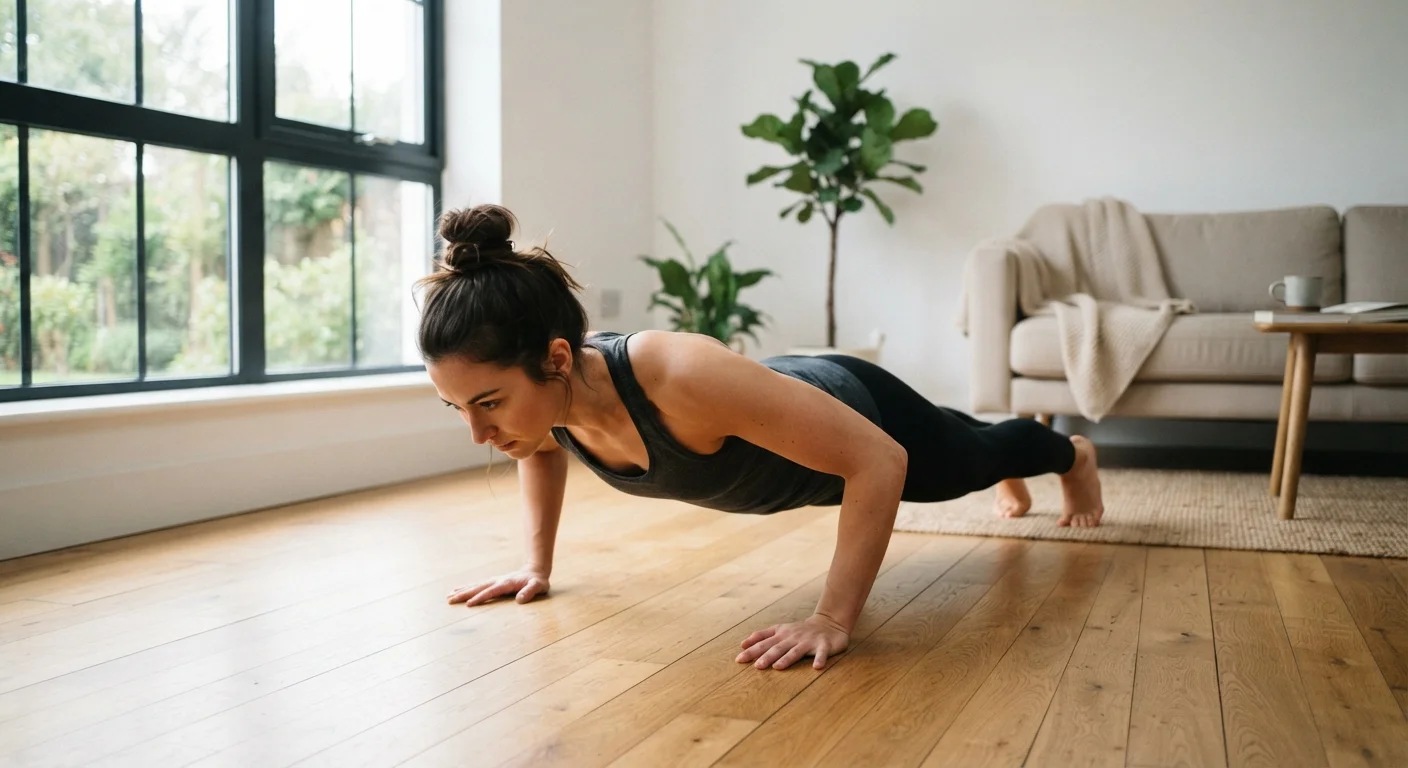
Why Bodyweight Training Is a Legitimate Strength Method
Gym memberships, barbells, and cable machines are useful - but they are not prerequisites for building functional strength. Bodyweight training uses your own mass as resistance, which means the load scales naturally with you and can be adjusted through leverage, tempo, and range of motion rather than adding weight plates.
Research consistently supports resistance training as beneficial for muscle development, bone density, metabolic health, and functional movement across all age groups. Bodyweight methods produce these adaptations when applied with the same principles that govern any sound strength program: progressive overload, adequate rest, and consistency over time.
If you're entirely new to structured movement, this ground-up introduction to physical activity covers foundational concepts worth understanding first.
Check In With Your Doctor First
This article provides general fitness education, not personalized medical advice. If you have a chronic condition, recent injury, or have been inactive for an extended period, consult a qualified healthcare professional before starting any new exercise program. Your individual circumstances matter and a professional can help you train safely.
What You Need Before You Start
The material requirements for effective bodyweight training are genuinely minimal. Most people already have everything they need.
What you will need
If you're considering adding optional items over time, see what a home workout space actually requires for an honest breakdown. For this routine, the items below are all that's useful to have on hand.
Exercise mat or folded blanket
Provides cushioning for floor-based movements like planks and glute bridges.
Timer or phone stopwatch
Used to track rest intervals and timed holds like planks.
Sturdy chair or low step
Supports modified push-ups and step-ups as an accessible exercise variation.
Workout log (notebook or notes app)
Records sets, reps, and perceived effort so you can track progress over time.
How to Build and Run Your Routine
The steps below walk you through setting up and executing a bodyweight strength routine from scratch. Follow them in order - each step informs the next.
Assess Your Starting Point Honestly
Before choosing exercises, take stock of what your body can currently do. Can you complete one full push-up with your knees off the floor? Can you squat to chair height without knee discomfort? These baseline checks aren't a test - they're information. Starting at the right level prevents early burnout and injury, both of which are leading reasons people quit. If you're new to structured movement, the personal readiness checklist is a useful first stop before you begin.
Choose a Simple Three-Day Weekly Structure
For most beginners, training three non-consecutive days per week - such as Monday, Wednesday, and Friday - gives your muscles enough stimulus to adapt while allowing adequate recovery. Each session should target your full body rather than isolated muscle groups. This approach is efficient, sustainable, and well-supported by general exercise science principles for newcomers to strength training.
Build Your Core Exercise Menu
Select one movement from each of the following categories to create a balanced session:
- Push (upper body): Push-up or incline push-up
- Pull (upper body): Door-frame row or towel row using a table
- Squat (lower body): Bodyweight squat or sit-to-stand from a chair
- Hinge (posterior chain): Glute bridge or single-leg glute bridge
- Core stability: Dead bug or forearm plank
Five movements per session is enough. Resist the urge to add more - complexity does not equal effectiveness at this stage.
Set Realistic Sets and Repetitions
Begin with 2 sets of 8-10 repetitions per exercise, resting 60-90 seconds between sets. This volume is modest by design. Your goal in the first two weeks is to practice movement quality, not chase fatigue. Once the prescribed reps feel manageable - meaning you could do 2-3 more - increase to 3 sets before adding reps. Progress is built incrementally, not all at once.
Warm Up and Cool Down Every Session
Spend 3-5 minutes before your workout doing light movement: arm circles, leg swings, gentle squats, or a brisk walk around the room. This increases blood flow to muscles and prepares your joints. After training, spend another 3-5 minutes on slow, static stretches targeting the areas you worked. Neither phase needs to be elaborate - consistency matters more than duration.
Progress Gradually Over Four-Week Blocks
Every four weeks, reassess and adjust one variable at a time: add a rep, add a set, or move to a harder exercise variation. Do not change everything simultaneously. For example, in week five, you might progress from a standard squat to a pause squat (holding the bottom position for two seconds). Small, deliberate progressions accumulate into meaningful strength gains over months. For more on why routines derail - and how to prevent it - see why new workout habits fall apart.
Track Your Workouts Simply
You don't need an app. A plain notebook or notes app works perfectly. Write down each exercise, how many reps you completed, and how it felt. Reviewing past entries shows you concrete progress, which is one of the strongest motivators for continuing.
Pain Is Not the Goal
Muscle fatigue during exercise is normal. Sharp, joint-based, or persistent pain is not. If you feel sudden pain during any movement, stop immediately. Do not push through pain hoping it resolves - this can worsen minor issues into serious injuries.
Making the Habit Last Beyond the First Month
The most technically perfect routine fails if it's abandoned. Adherence - showing up consistently over weeks and months - is the single greatest predictor of results. A few practices help make that easier:
- Anchor workouts to existing habits. Training immediately after morning coffee or before your evening shower removes the decision of when to go.
- Reduce friction. Keep your workout log and mat visible. Obstacles to starting, however small, compound over time.
- Redefine success. Completing the session - even a shortened one - counts. A 15-minute workout beats a skipped one every time.
- Expect imperfect weeks. Missing a session is not failure. Returning to the routine after a skip is the skill worth developing.
Bodyweight training also fits naturally into a solo schedule, but if you find you work better with social accountability, it's worth reading about group versus solo training to understand which environment supports you best.
This article is for general informational and educational purposes only and does not constitute medical advice. Consult a qualified healthcare professional before beginning any new exercise program, particularly if you have an existing health condition, injury, or other individual concern.
The content provided on our blog site traverses numerous categories, offering readers valuable and practical information. Readers can use the editorial team’s research and data to gain more insights into their topics of interest. However, they are requested not to treat the articles as conclusive. The website team cannot be held responsible for differences in data or inaccuracies found across other platforms. Please also note that the site might also miss out on various schemes and offers available that the readers may find more beneficial than the ones we cover.