

Why Low-Impact Exercise Deserves a Closer Look
There's a persistent myth that exercise only "counts" if it leaves you breathless and sore. In reality, low-impact movement - activity that keeps at least one foot on the ground or otherwise minimizes joint stress - can support cardiovascular health, muscle strength, flexibility, and mental wellbeing just as effectively for many people.
Low-impact doesn't mean low-effort. It simply means the forces transmitted through your hips, knees, and ankles are reduced compared with activities like running or jumping. That distinction matters enormously for people managing joint discomfort, recovering from injury, returning to fitness after a break, or simply looking for sustainable habits they can maintain for decades.
If you're new to building a movement habit, our beginner's guide to physical activity offers a foundation to work from before diving into any specific activity. And if time is the main barrier, it's worth reading what exercise science says about fitting movement into a packed schedule.
The six activities below represent a range of formats, settings, and intensities - all with one thing in common: they're kinder to your body's joints while still moving you toward your wellness goals.
Swimming
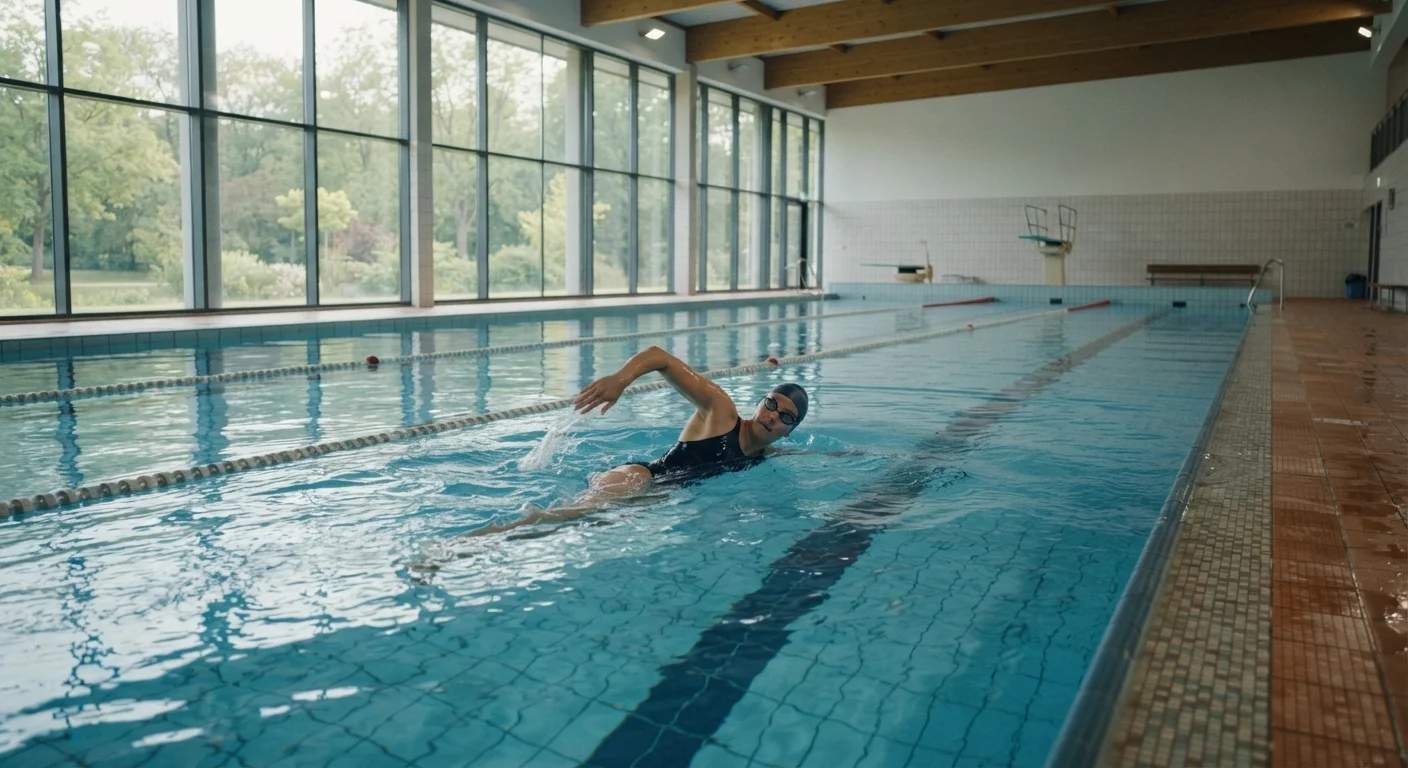
Water supports up to 90% of body weight when you're submerged to the neck, making swimming one of the most joint-friendly cardiovascular activities available. The resistance water provides also means muscles work harder than the effort might feel - building endurance and strength simultaneously.
Swimming engages virtually every major muscle group, and varying strokes (freestyle, backstroke, breaststroke) shifts the emphasis and keeps sessions from becoming repetitive. For people with arthritis, fibromyalgia, or recovering from lower-limb injuries, warm-water pools in particular are often recommended by physical therapists as a therapeutic environment for movement.
Access does require a pool, which can be a barrier. Many community recreation centers and YMCAs offer affordable lap swimming, making this more accessible than a gym membership for some households.
Water supports up to 90% of body weight, making swimming uniquely gentle on every major joint.
Cycling (Stationary or Outdoor)
Whether on a stationary bike or outdoors on a trail or road, cycling keeps your body weight supported through the seat - dramatically reducing the ground-reaction forces that running places on knees and hips. It's an excellent aerobic workout that can be scaled from a gentle pedal to a vigorous sustained effort by adjusting resistance or terrain.
Stationary bikes are particularly useful for people who want weather-independent, predictable exercise. Recumbent bikes (where you sit in a reclined position with pedals in front) offer even more back and hip support, making them a common recommendation for older adults or those with lower-back concerns.
Proper bike fit - whether on a stationary machine or road bike - matters. A seat that's too low, for instance, increases knee stress. Many cycling facilities or bike shops can assist with basic fitting.
Cycling delivers strong cardiovascular benefits while keeping joint-loading far below what running demands.
Walking
Walking is often underestimated, yet research consistently supports it as a meaningful contributor to cardiovascular health, metabolic function, and even mood. It's accessible to most people, costs nothing, requires no training, and can be done almost anywhere.
The distinction between walking and running matters biomechanically: walking always keeps one foot in contact with the ground, eliminating the airborne phase and the impact force that comes with landing. For most healthy adults, brisk walking - defined loosely as a pace where you can talk but not sing - provides moderate-intensity aerobic activity.
Adding incline (hills or treadmill grade) meaningfully increases cardiovascular demand without increasing impact. For a deeper comparison of what separates walking from running as an exercise choice, see our piece on walking vs. running and when each makes sense.
Brisk walking is a genuinely effective cardiovascular activity - no equipment, no gym, no barrier to entry.
Yoga
Yoga combines flexibility work, balance training, and isometric strength - holding poses recruits muscles without the repetitive loading that higher-impact activities involve. It also incorporates controlled breathing and mindfulness elements, which have well-documented associations with reduced stress and improved sleep quality.
The range of yoga styles means it scales to nearly any fitness level. Gentle or restorative yoga prioritizes flexibility and relaxation; vinyasa or power yoga introduces a more aerobic flow. Hatha yoga sits in the middle, focusing on fundamental poses held for longer periods.
Online classes, apps, and community studio drop-ins have made yoga broadly accessible. Beginners benefit most from starting with an instructor - in person or via video - to learn safe alignment before practicing independently.
Yoga builds strength and flexibility simultaneously while offering mental wellbeing benefits backed by solid research.
Elliptical Training
Elliptical machines simulate a running motion while keeping your feet in continuous contact with the pedals - eliminating the impact of each footstrike entirely. The result is a cardiovascular workout that can reach moderate to vigorous intensity without the joint loading associated with outdoor running on hard surfaces.
Most ellipticals also include moveable handlebars, which engage the upper body and distribute effort across more muscle groups. Resistance and incline adjustments allow the workout to be tailored from a gentle warm-up pace to a demanding training session.
Ellipticals are primarily found in gyms and fitness centers, though compact home versions exist. They're particularly common in cardiac rehabilitation and post-surgical fitness programs precisely because of their low joint impact profile.
Elliptical training replicates the aerobic demand of running while eliminating the impact forces that cause joint strain.
Tai Chi
Tai chi is a Chinese martial art practiced for health that involves slow, deliberate movements linked in a flowing sequence. Because movements are controlled and weight shifts are gradual, the forces through the joints remain low - while balance, coordination, and lower-body strength are meaningfully challenged.
A growing body of research has examined tai chi's effects on balance and fall prevention in older adults, with findings generally supporting its benefits in this area. It has also been studied in the context of managing chronic conditions such as osteoarthritis and high blood pressure, though anyone with these conditions should discuss exercise choices with their healthcare provider.
Classes are widely available through community centers, senior programs, and online platforms. The learning curve is gentle, and many practitioners continue for decades - a sign that it's genuinely sustainable over the long term.
Tai chi's slow, controlled movements build balance and lower-body strength with virtually no joint impact.
Finding What Works for You
No single activity is universally ideal. The best low-impact exercise is the one you'll actually do consistently - and that fits your body, schedule, and preferences. If solo workouts feel isolating, it may help to explore whether group or solo training suits your personality better.
Start With One Activity, Not Six
When exploring low-impact options, resist the urge to try everything at once. Pick one activity that genuinely interests you and commit to it for two to four weeks before assessing whether it fits. Building a consistent habit with a single activity is far more productive than sampling widely and sticking with nothing. Once the habit is established, layering in variety becomes much easier.
It's also worth remembering that structured exercise isn't the only way movement accumulates. NEAT - non-exercise activity thermogenesis - covers the energy you burn through everyday tasks like walking to your car, standing at a counter, or taking stairs. Low-impact exercise and NEAT work well together as part of a broader active lifestyle.
If your day is mostly desk-bound, pairing one of the activities above with strategies for staying active during sedentary work hours can make a meaningful difference over time.
This article is for general informational and educational purposes only and is not a substitute for professional medical advice. If you have a health condition, injury, or concern about starting a new exercise program, please consult a qualified healthcare provider before making changes to your physical activity routine.
The content provided on our blog site traverses numerous categories, offering readers valuable and practical information. Readers can use the editorial team’s research and data to gain more insights into their topics of interest. However, they are requested not to treat the articles as conclusive. The website team cannot be held responsible for differences in data or inaccuracies found across other platforms. Please also note that the site might also miss out on various schemes and offers available that the readers may find more beneficial than the ones we cover.