

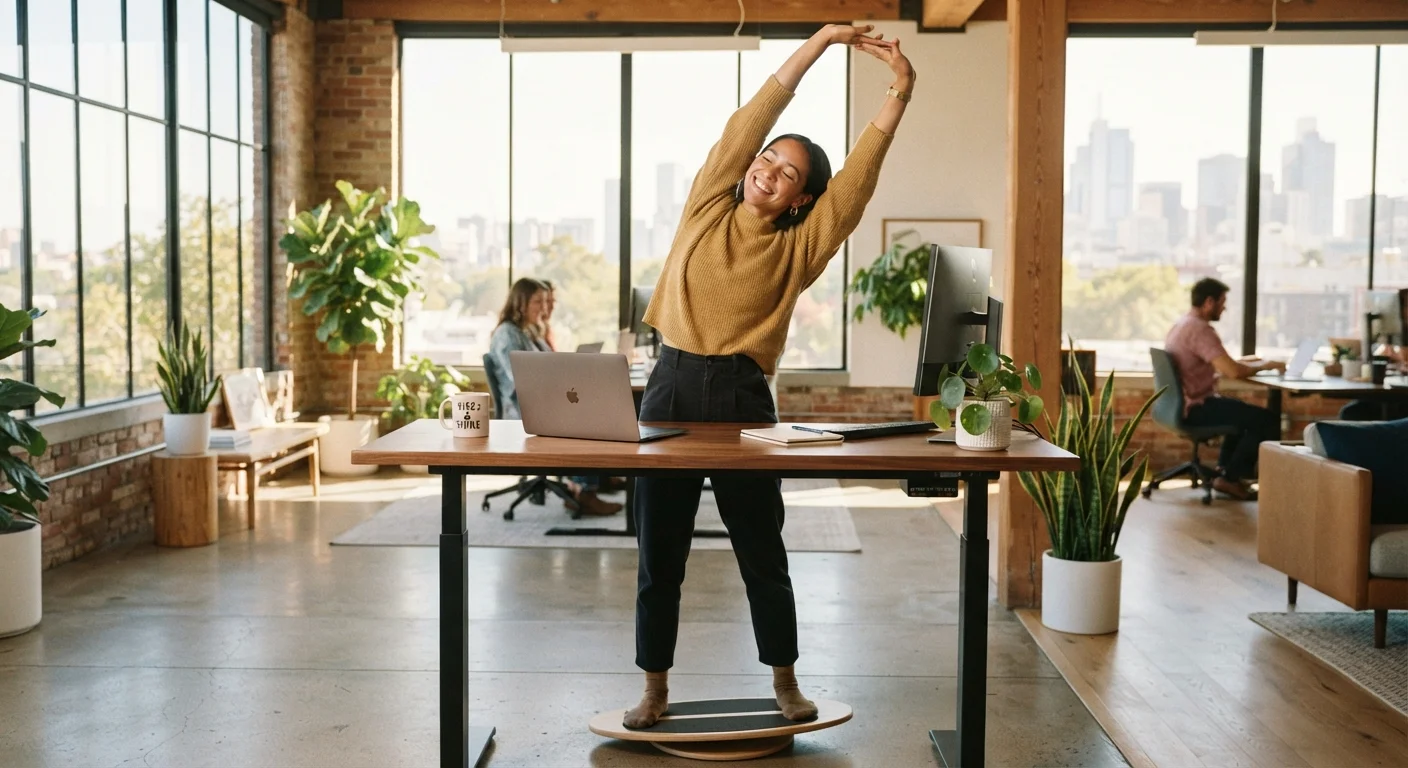
Why Sitting All Day Is Worth Taking Seriously
Most full-time desk workers spend six to nine hours a day seated - and research consistently shows that prolonged, uninterrupted sitting is associated with higher risks of cardiovascular disease, metabolic issues, and musculoskeletal discomfort. Importantly, studies suggest these risks exist even in people who exercise regularly outside of work hours. A single gym session doesn't fully undo a day of near-complete stillness.
The good news: you don't need to overhaul your schedule or invest in expensive equipment. What the evidence points to is the value of breaking up sitting time throughout the day - and most of that can happen within your existing routine. For a deeper look at how physical movement affects mood and mental clarity, see how activity and emotional health connect.
Best Practices for Staying Active at a Desk Job
The following practices are grounded in general exercise science and behavioral research. They're designed to be realistic for people managing full workdays, not just those with flexible schedules or remote setups.
Set a movement reminder every 45-60 minutes during your workday.
Uninterrupted sitting suppresses blood flow and reduces muscle activation over time. Short interruptions - even 2-5 minutes of standing or light movement - help maintain circulation and reduce discomfort. Habit cues like phone alarms or desktop reminders make this sustainable without relying on willpower alone.
Stand or walk during phone calls and virtual meetings that don't require screen interaction.
Phone calls and audio-only meetings are natural opportunities to add movement without sacrificing productivity. Walking while talking can increase your total daily step count meaningfully without requiring any dedicated exercise time.
Use your lunch break deliberately - even a 10-minute walk counts.
Many desk workers eat lunch at their desks, forfeiting the one mid-day break that could include movement. A short walk after eating supports both physical activity and post-meal blood sugar management, according to general guidance from organizations like the American Diabetes Association.
Build a standing or walking option into your workstation when possible.
Alternating between sitting and standing - rather than standing all day - reduces cumulative pressure on the lower back and helps maintain alertness. You don't need a purpose-built standing desk; a raised surface or laptop riser can serve a similar function.
Incorporate simple movement into existing daily transitions.
Attaching movement to already-fixed moments (arriving at work, returning from the restroom, brewing coffee) reduces the mental effort of forming new habits. This is sometimes called 'habit stacking,' and it leverages routines you already follow.
Prioritize <a href="/health-wellness/fitness-movement/low-impact-exercise-options-worth-knowing-about">low-impact movement options</a> for before- or after-work activity.
High-intensity exercise after a long workday can feel daunting and unsustainable. Low-impact options - like walking, cycling, or swimming - are easier to maintain consistently, which matters far more than intensity for long-term health habits.
For a broader look at how small, consistent movements add up - including the science behind non-exercise activity thermogenesis - explore NEAT and effortless daily movement.
Quick Wins You Can Start Today
You don't need a perfect plan to begin. The practices below can be layered in gradually - pick one or two that fit your current setup, then build from there. Even modest, consistent changes tend to compound over time.
If your schedule feels genuinely packed, research on minimum effective doses of movement offers useful perspective on what actually moves the needle.
A Note on Special Circumstances
If you have a chronic condition, recent injury, or are pregnant, the general practices described here may need to be adapted. Always consult a healthcare provider before significantly changing your activity levels. These suggestions are general wellness education, not individualized medical guidance.
This article is for general informational and educational purposes only and is not a substitute for professional medical advice. If you have a health condition or concerns about beginning a new activity routine, consult a qualified healthcare provider before making changes.
The content provided on our blog site traverses numerous categories, offering readers valuable and practical information. Readers can use the editorial team’s research and data to gain more insights into their topics of interest. However, they are requested not to treat the articles as conclusive. The website team cannot be held responsible for differences in data or inaccuracies found across other platforms. Please also note that the site might also miss out on various schemes and offers available that the readers may find more beneficial than the ones we cover.