

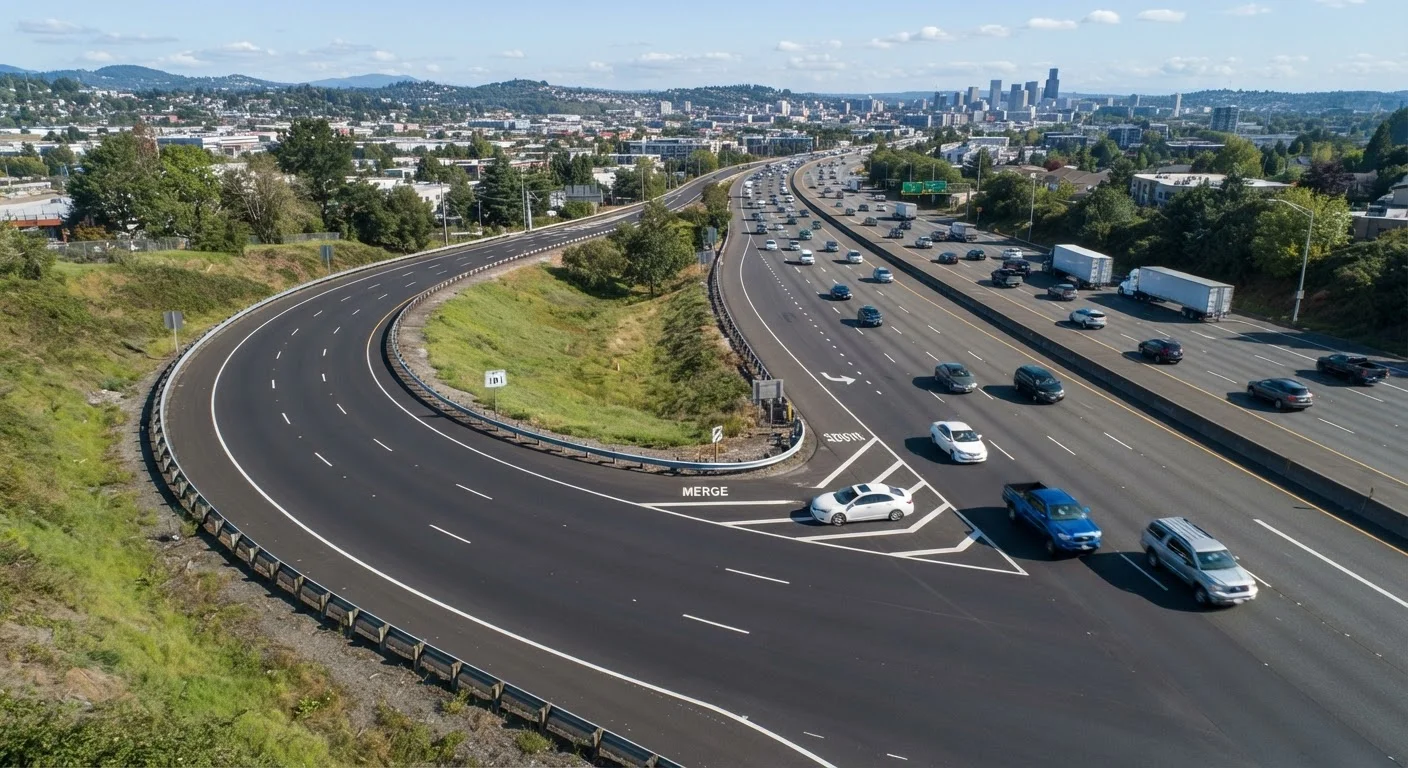
Why Merging Feels Stressful - and What's Actually Going On
Highway merging is one of the most anxiety-inducing moments for everyday drivers, particularly those with less experience on high-speed roads. The core challenge is simultaneous: you're accelerating, navigating a curve, reading traffic, and making a split-second decision - all at once. That mental load is real, and it's why poor merging technique is a significant contributor to highway incidents.
The good news is that merging is a learnable skill with a clear, repeatable process. Most merge-related close calls stem from a handful of predictable mistakes: entering too slowly, failing to signal, not scanning early enough, or panicking and stopping. Understanding the mechanics of a good merge - rather than relying on instinct - makes the maneuver far more manageable. Drivers building foundational road skills will find this connects directly to broader confidence-building strategies for new drivers.
It's also worth noting that merging is a two-way street. While the merging driver bears primary responsibility for yielding, experienced highway drivers often ease over slightly or adjust speed when it's safe to do so. This kind of cooperative driving reduces friction for everyone on the road.
Use the Two-Second Gap Rule
Before committing to a merge, confirm the gap in the target lane is large enough to absorb your vehicle with margin on both ends. A gap of at least two seconds of following distance - front and rear - gives you a reasonable safety buffer. For a refresher on following distance principles, see our rules reference on following distance.
Step-by-Step: How to Merge onto a Highway Correctly
What you will need
Properly adjusted mirrors
Eliminate blind spots and give you a clear view of approaching highway traffic during the merge.
Working turn signals
Communicate your intent to merge to surrounding drivers before you move.
A clear, unobstructed windshield and windows
Ensure full visibility of the on-ramp, acceleration lane, and merging zone.
Check your mirrors and signal before you reach the ramp
As you approach the on-ramp, check all three mirrors and activate your turn signal. Signaling early isn't just a legal requirement in most states - it tells highway drivers you're preparing to enter, giving them time to adjust their position or speed if they choose to cooperate.
Accelerate steadily on the on-ramp to match highway speed
The on-ramp's acceleration lane exists for one purpose: to bring your speed up to match the flow of highway traffic before you merge. Accelerate smoothly and firmly so that by the time you reach the merge point, you're traveling at or near the speed of vehicles already in the right lane. Entering significantly slower than surrounding traffic forces other drivers to brake abruptly, increasing rear-end collision risk.
Scan continuously for a safe gap in the right lane
While accelerating, divide your attention between the road ahead on the ramp and the traffic approaching in the right lane. Look for a gap - a space between two vehicles large enough to accommodate your car with a comfortable buffer on both sides. Avoid fixating on a single vehicle; scan the entire visible lane to anticipate the right moment.
Commit to the gap and merge smoothly
Once you've identified a suitable gap and your speed matches traffic, steer confidently into the lane. Hesitation at this point is more dangerous than committing - abrupt steering corrections at highway speeds reduce your control and can surprise nearby drivers. Move with intention, maintaining your speed as you settle into the lane.
Cancel your signal and establish a safe following distance
Once you've merged successfully, turn off your signal if it hasn't self-cancelled. Immediately establish a safe following distance from the vehicle ahead - at minimum, the two-second rule under normal conditions. Avoid the temptation to immediately change lanes; settle into the right lane briefly before making any additional moves. Tailgating after a merge is a common and dangerous error that many drivers overlook.
Never Stop on an Active On-Ramp
Coming to a complete stop at the end of an on-ramp is one of the most hazardous mistakes a driver can make. It forces vehicles behind you to brake suddenly in a high-speed zone and makes it nearly impossible to re-enter highway traffic safely. If traffic is heavy, maintain a slow roll and look for any workable gap rather than stopping entirely.
Short On-Ramps Require Extra Planning
Some older highways feature on-ramps that are extremely short, giving drivers little room to accelerate. In these situations, start scanning for gaps as soon as you enter the ramp - not at the end of it. Adjust your speed early so you're not forced into a panic merge at the last second.
Developing consistent merging habits will also reinforce other safe driving behaviors. Subtle habits that erode safety often start small - like skipping signal use on a familiar ramp - and compound over time. Treating every merge as a deliberate, structured action keeps those habits from forming. Weather also plays a role: wet or icy ramps require more braking distance and reduce tire grip, so adapt your acceleration and gap expectations accordingly. Our guide on driving in rain, snow, and fog covers those adjustments in detail.
The content provided on our blog site traverses numerous categories, offering readers valuable and practical information. Readers can use the editorial team’s research and data to gain more insights into their topics of interest. However, they are requested not to treat the articles as conclusive. The website team cannot be held responsible for differences in data or inaccuracies found across other platforms. Please also note that the site might also miss out on various schemes and offers available that the readers may find more beneficial than the ones we cover.