

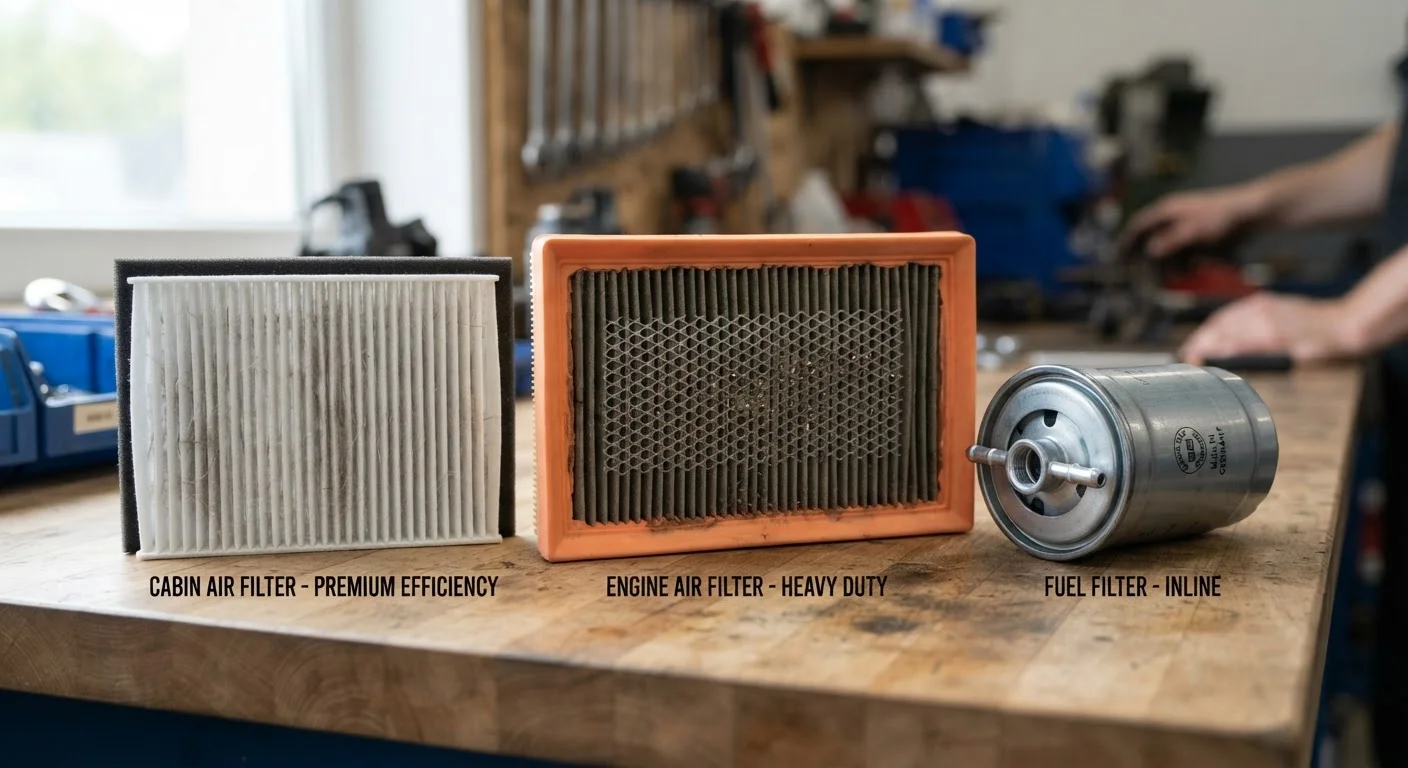
The Filters Working Quietly Behind the Scenes
Most drivers think of oil changes as the cornerstone of routine maintenance - and rightly so. But three other filters work continuously in the background, protecting everything from your lungs to your engine's longevity. Skipping them rarely causes an immediate breakdown, which is exactly why they tend to get overlooked until a real problem surfaces.
Cabin air filters, engine air filters, and fuel filters each perform a distinct job. Understanding what they do and how to spot the signs of wear is one of the easiest ways to stay ahead of preventable repair bills. As we note in our look at hidden car ownership costs, the expenses that catch owners off guard are often the routine ones they assumed could wait.
Cabin Air Filter: The One That Affects You Directly
The cabin air filter cleans the air flowing through your vehicle's heating, ventilation, and air conditioning (HVAC) system before it reaches you and your passengers. It traps dust, pollen, mold spores, and other fine particles - making it particularly important for anyone with allergies or respiratory sensitivities.
Typical replacement interval: Every 15,000-25,000 miles, though drivers in dusty or high-pollen environments may need to replace it more frequently.
Signs it's time for a change:
- Reduced airflow from the vents even at high fan settings
- Musty or stale odor inside the cabin when the HVAC runs
- Increased dust accumulation on the dashboard
- Allergy symptoms that seem worse inside the car
Replacing a cabin air filter is usually a tool-free job accessible through the glove box or beneath the dashboard. Check your owner's manual for the exact location on your vehicle.
A clogged cabin filter quietly degrades the air quality you breathe on every commute.
Engine Air Filter: The Gatekeeper for Your Engine
The engine air filter prevents dirt, debris, and insects from entering the engine's combustion chambers. Engines require a precise mixture of air and fuel to run efficiently, and a restricted or dirty filter disrupts that balance - forcing the engine to work harder and burning more fuel in the process.
Typical replacement interval: Every 15,000-30,000 miles under normal driving conditions. Dusty environments, unpaved roads, or frequent stop-and-go traffic can shorten that window significantly.
Signs it's time for a change:
- Noticeable drop in fuel economy over time
- Sluggish acceleration or reduced throttle response
- Rough idling or misfires in some cases
- A visibly dirty or gray filter when inspected (new filters are typically white or off-white)
The engine air filter sits in a plastic housing - usually a large black box near the top of the engine - and can be replaced in minutes without special tools on most vehicles. It's worth inspecting it whenever you have the hood up for other routine checks, such as those covered in our guide to checking car fluids.
A starved engine runs inefficiently - an overdue air filter can quietly hurt your fuel economy for months.
Fuel Filter: Protecting the Heart of the Fuel System
The fuel filter removes contaminants - sediment, rust particles, and other debris - from the gasoline or diesel before it reaches the fuel injectors or carburetor. Clean fuel delivery is essential for smooth combustion; a blocked filter restricts flow and can cause a range of performance issues, and in severe cases may strain the fuel pump, leading to a more costly repair.
Typical replacement interval: This varies significantly by vehicle. Some manufacturers recommend replacing an in-line fuel filter every 20,000-40,000 miles; others use filters integrated into the fuel tank assembly that are designed to last longer. Always refer to your owner's manual for your specific vehicle's guidance.
Signs it's time for a change:
- Difficulty starting, especially after the vehicle has been sitting
- Hesitation or stumbling during acceleration
- Engine stalling at low speeds or idle
- Noticeable loss of power, particularly when climbing hills or under load
Important: Fuel filter replacement involves working with fuel lines under pressure on many vehicles. If you're not comfortable with fuel system work, have this job done by a qualified mechanic. Safety first - fuel and ignition sources don't mix.
A restricted fuel filter doesn't just hurt performance - it can shorten the life of your fuel pump.
Putting It All Together
None of these three filters is complicated, but together they represent a maintenance category that many drivers simply forget about between oil changes. Adding a filter check to your seasonal routine - something our seasonal car maintenance checklist covers in detail - takes only a few minutes and can reveal problems before they escalate.
Cabin and engine air filters are generally straightforward DIY replacements. Fuel filter replacement is more involved and, on some modern vehicles, requires dropping the fuel tank - a job best left to a qualified mechanic if you're not experienced with fuel system work. When in doubt, consult your owner's manual or a trusted professional rather than guessing.
Make Filter Checks a Seasonal Habit
Each time you rotate your tires or change your oil, take two minutes to visually inspect your cabin and engine air filters. Hold them up to the light - if they're visibly clogged with gray or black debris, they're past due. Building this habit into your regular service rhythm means you'll rarely be caught off guard by a filter-related issue.
This article is for general informational and educational purposes only. Always consult your vehicle's owner's manual and a qualified mechanic before performing maintenance, particularly on fuel system components.
The content provided on our blog site traverses numerous categories, offering readers valuable and practical information. Readers can use the editorial team’s research and data to gain more insights into their topics of interest. However, they are requested not to treat the articles as conclusive. The website team cannot be held responsible for differences in data or inaccuracies found across other platforms. Please also note that the site might also miss out on various schemes and offers available that the readers may find more beneficial than the ones we cover.