

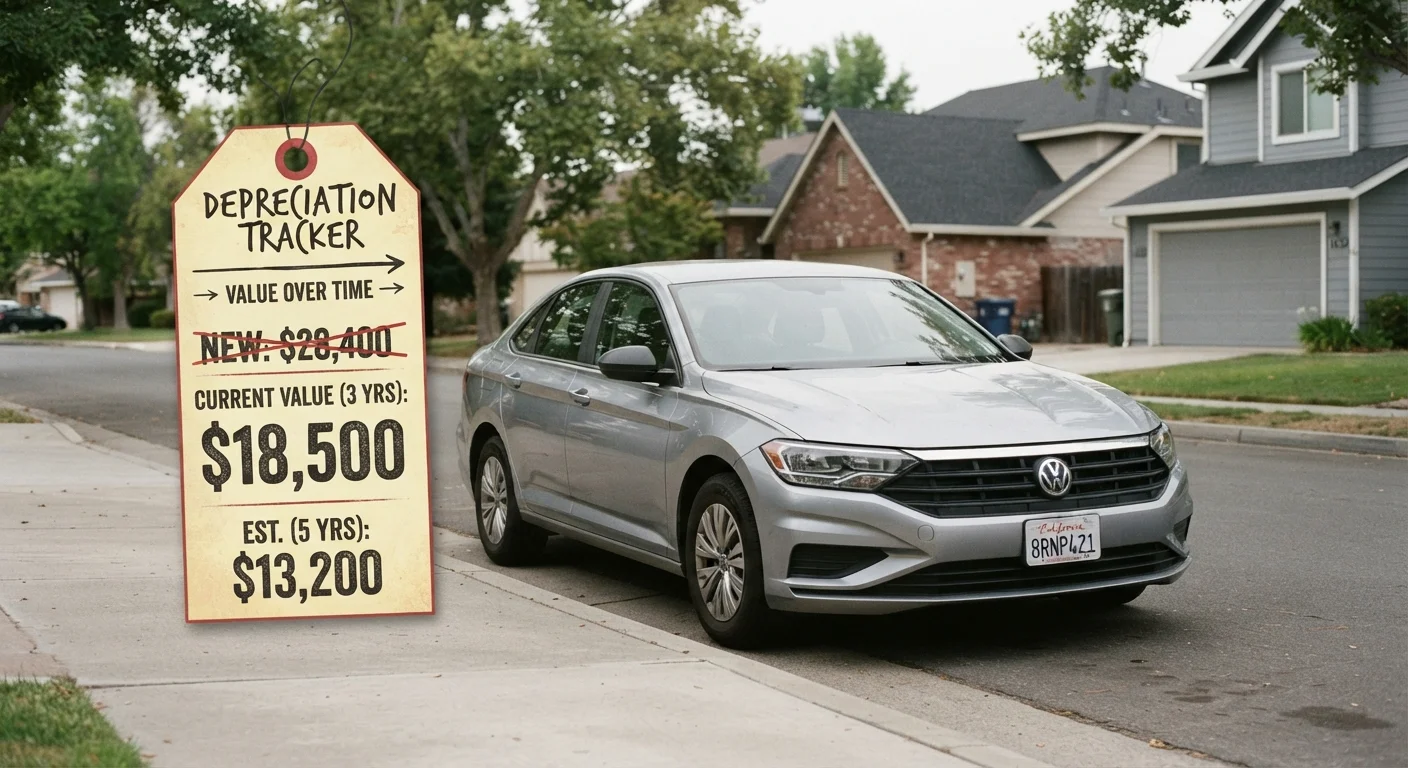
Why Depreciation Is the Cost Drivers Most Often Ignore
Unlike a repair bill or a fuel receipt, depreciation never shows up as a charge in your account. Yet it quietly erodes your vehicle's worth every single month. For most American drivers, it represents the single largest annual cost of car ownership - and it's one that's rarely factored into a monthly car budget.
Understanding the true cost of owning a car means putting depreciation front and center alongside gas, insurance, and maintenance. When you do, the financial picture of car ownership looks very different from the sticker price.
~20%
Average first-year value loss for new vehicles
Industry data consistently shows new cars lose roughly 15-25% of their value within the first 12 months, with the exact rate varying by segment and model.
~50-60%
Typical depreciation over five years
Over a five-year ownership period, most new vehicles lose more than half their original purchase value to depreciation alone.
#1
Largest annual cost of car ownership
For many drivers, depreciation exceeds fuel, insurance, and maintenance costs combined when calculated on an annual basis.
How the Depreciation Curve Actually Works
Depreciation doesn't happen at a steady, linear rate. The steepest drop occurs in the early years of a vehicle's life. A new car can shed 15-25% of its value in the first year. By the end of year five, cumulative depreciation commonly reaches 50-60% of the original purchase price.
After the first five to seven years, the pace slows considerably. An older vehicle with an already-low market value simply has less ground to lose. This depreciation curve is the key insight behind the financial argument for buying used - a strategy explored in detail in our comparison of new and used vehicle costs.
The curve also explains why a two- or three-year-old vehicle can represent better value: the original buyer absorbed the steepest depreciation, and the car may still have the majority of its useful life ahead.
Factors That Speed Up or Slow Down Depreciation
No two vehicles depreciate at exactly the same rate. Several key factors shape how quickly a specific car loses value:
- Make and model reputation: Vehicles with a track record for reliability and durability tend to command stronger resale prices. Consumer demand plays a direct role in what the used-car market will pay.
- Mileage: Higher mileage signals more wear on mechanical components and typically reduces a vehicle's market value. Average annual mileage in the US runs roughly 12,000-15,000 miles; vehicles well above that threshold often depreciate faster.
- Condition: Dents, interior damage, and deferred maintenance all reduce what a buyer will pay. A well-maintained car with service records generally holds more value.
- Market demand and fuel prices: Consumer preferences shift. When fuel prices spike, large SUVs and trucks can lose value faster; when they drop, demand - and resale prices - may recover.
- Trim level and features: Popular option packages can support higher resale prices, while unusual configurations may limit the pool of interested buyers.
Slow Depreciation With Good Maintenance
Keeping up with scheduled maintenance, addressing cosmetic damage promptly, and retaining service records can help preserve resale value over time. A documented maintenance history signals to future buyers that the vehicle was cared for, which can support a stronger asking price. Visit our car maintenance hub for practical guidance on keeping your vehicle in top shape.
What Depreciation Means for Your Financial Decisions
Recognizing depreciation as a real cost changes how you should evaluate a vehicle purchase. A car that costs less per month in loan payments but depreciates faster may cost more overall than a slightly pricier option that holds its value better.
This also matters when financing. If a vehicle depreciates faster than you pay down your loan, you can end up "upside down" - owing more on the loan than the car is currently worth. Gap insurance exists specifically to cover this scenario, though it adds to ownership costs.
Depreciation is one of several hidden costs of car ownership that rarely make it into a household budget. Factoring it in alongside fuel, insurance, and maintenance gives a far more accurate picture of what a vehicle will truly cost you over the years you own it.
For a broader view of how these costs interact with your overall budget, see our guide on common car budgeting mistakes.
This article is for general informational and educational purposes only and does not constitute financial or tax advice. Consult a qualified financial or tax professional for guidance specific to your situation.
Frequently Asked Questions
Most new vehicles lose roughly 15-25% of their purchase price within the first 12 months of ownership. Over five years, the cumulative loss commonly reaches 50-60% of the original sticker price, though rates vary widely by make, model, and market conditions.
Vehicles with strong brand reputations for reliability, high consumer demand, and limited supply tend to hold their value better than average. Pickup trucks and certain SUVs have historically shown slower depreciation than sedans, though this can shift with fuel prices and market trends.
Both mileage and age contribute to depreciation, but high mileage can accelerate value loss considerably. Lenders and appraisers typically treat vehicles with significantly above-average annual mileage as higher risk, which reduces resale value.
Personal vehicle depreciation is generally not deductible for federal income tax purposes. However, if you use a vehicle for business, you may be able to deduct depreciation under IRS rules. Consult a qualified tax professional to understand what applies to your situation.
Color can have a modest effect on resale value. Neutral colors like white, silver, gray, and black tend to have broader buyer appeal and may hold value slightly better than unusual or niche colors in many markets.
When you lease, you're essentially paying for the depreciation that occurs during your lease term rather than absorbing the full vehicle depreciation over years of ownership. You avoid the residual loss at the end - but you also build no equity. Leasing shifts, rather than eliminates, the depreciation cost.
The content provided on our blog site traverses numerous categories, offering readers valuable and practical information. Readers can use the editorial team’s research and data to gain more insights into their topics of interest. However, they are requested not to treat the articles as conclusive. The website team cannot be held responsible for differences in data or inaccuracies found across other platforms. Please also note that the site might also miss out on various schemes and offers available that the readers may find more beneficial than the ones we cover.