

Our Verdict
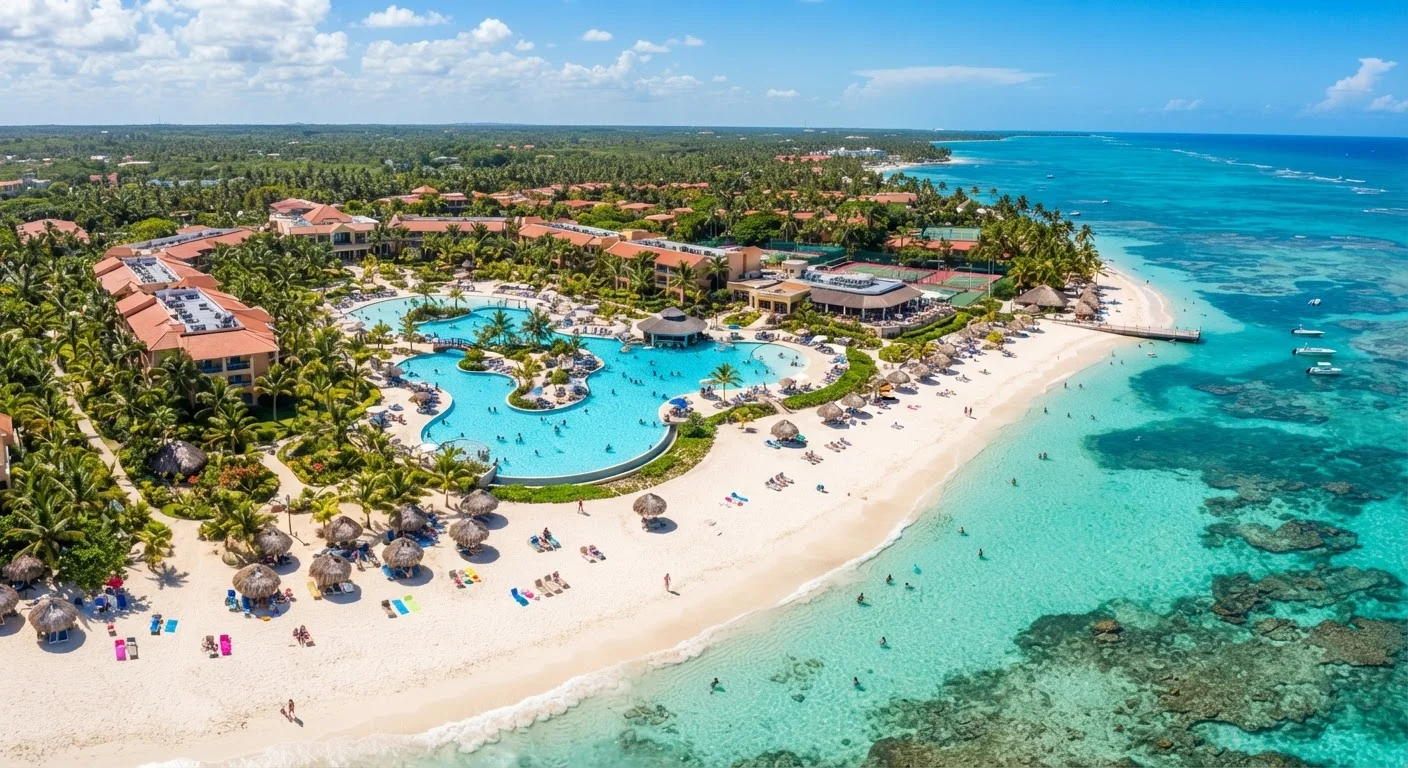
All-inclusive travel genuinely delivers on predictability, ease, and social convenience - especially for families, couples seeking pure relaxation, or first-time international travelers who want a lower-stress entry point. That said, the format can limit authentic cultural experiences and quietly inflate costs if you're not paying attention to what's actually included. It's not the right fit for every traveler or destination.
Best for families with children, couples prioritizing downtime over discovery, and travelers who value a fixed budget over flexibility and local exploration.
What All-Inclusive Actually Means
At its core, an all-inclusive resort bundles your accommodation, meals, beverages, and a range of activities into one upfront price. The appeal is obvious: pay once, stop thinking about money. But the specifics vary enormously between properties. Some include premium spirits and specialty restaurants; others limit you to buffet dining and house-brand drinks unless you pay extra.
Before comparing sticker prices, it's worth reading the fine print on what's actually in the package. Gratuities, airport transfers, motorized water sports, spa services, and à la carte dining are frequently excluded - sometimes significantly so. For a fuller picture of overlooked vacation expenses, see what most travelers forget to budget for.
"All-Inclusive" Is Not a Standardized Term
There's no industry-wide definition of what an all-inclusive package must cover. A resort in Mexico and one in the Caribbean can both use the label while offering meaningfully different inclusions. Always request a written breakdown of what's covered - and what isn't - before booking. Amenities like room service, specialty dining, and certain beverages may require additional payment even at highly rated properties.
The Real Advantages
When the format fits your travel goals, all-inclusive can genuinely deliver.
Predictable upfront cost simplifies budget planning
Paying one price for lodging, food, and activities removes daily spending decisions - a meaningful advantage for families or travelers on fixed vacation budgets.
Convenience and low decision fatigue on arrival
With meals, entertainment, and activities on-site, guests can decompress without navigating logistics. This is especially valuable for short trips where maximizing rest matters.
Family-friendly infrastructure in one place
Many all-inclusive properties are purpose-built for families, with kids' clubs, shallow pools, and supervised activities that make vacationing with children considerably easier.
Social atmosphere encourages easy connections
Communal dining, shared lounges, and organized events create natural opportunities to meet other travelers - a real advantage for solo travelers or social groups.
Lower financial anxiety during the trip
Without per-meal or per-drink charges accumulating, travelers often report enjoying the experience more freely, without the mental overhead of tracking spending.
Budget predictability is arguably the biggest draw. For families especially, knowing that meals, snacks, and kids' activities won't add up to daily surprises makes trip planning far less stressful. That peace of mind has real value, even if the math doesn't always favor all-inclusive over booking independently.
The social atmosphere at many resorts also works in travelers' favor - organized events, shared pools, and communal dining spaces make it easier to connect with other guests, which matters for solo travelers or those who thrive in group settings. For a broader look at how travel style affects planning, compare the solo vs. group travel planning realities.
The Real Disadvantages
The all-inclusive model also comes with genuine trade-offs that deserve honest consideration.
Hidden costs can erode the value proposition
Premium restaurants, top-shelf alcohol, motorized water sports, spa services, and airport transfers are frequently excluded, sometimes adding hundreds of dollars to the final cost.
Limited exposure to local culture and cuisine
Resort environments are designed for comfort and self-sufficiency, which can result in travelers leaving a destination without meaningfully experiencing its food, neighborhoods, or people.
Food and drink quality varies widely
Buffet-heavy dining at volume-oriented resorts rarely matches what independent travelers can find at local restaurants - and quality is hard to verify before arrival.
May not be cost-effective for smaller groups or short stays
Solo travelers and couples who eat and drink moderately often pay for capacity they don't use; shorter trips compress the per-night value even further.
Less flexibility in daily scheduling
Meal times, activity bookings, and resort rhythms can feel constraining for travelers who prefer unstructured exploration and spontaneous itinerary changes.
Environmental and economic concerns at some destinations
Large resort complexes sometimes operate with limited integration into local economies, with a greater share of revenue leaving the destination region rather than supporting local businesses.
Perhaps the biggest structural limitation is isolation from local culture. Resorts are frequently located away from city centers or authentic neighborhoods, and their self-contained nature makes it easy - sometimes too easy - to spend an entire week without meaningfully engaging with the destination. Travelers motivated by food, history, or local connection often find the format actively works against those goals.
It's also worth noting that all-inclusive resorts share some structural similarities with cruises: both bundle costs, limit external exploration, and can feel like a world unto themselves. What cruise brochures don't tell you applies equally well here - the pitch and the reality can diverge.
How to Evaluate Whether It's the Right Choice for Your Trip
The most useful planning move isn't asking whether all-inclusive is good or bad in the abstract - it's calculating whether it pencils out for your specific group, destination, and travel style.
~60%
US travelers who prioritize predictable vacation budgets
Travel industry surveys consistently find that cost predictability ranks among the top decision factors for American leisure travelers planning international trips.
15-30%
Portion of all-inclusive extras often excluded from base rate
Resort pricing analyses suggest that travelers who use premium services frequently spend 15-30% above the stated all-inclusive rate on add-ons and gratuities.
Start by building a realistic independent-travel budget for the same destination: flights, a comparable hotel, meals at a mix of price points, and the activities you'd actually do. Then compare that total to all-inclusive quotes, factoring in what's excluded. The vacation rental vs. hotel comparison framework is a useful model for this kind of total-cost thinking.
Also consider your own travel personality. If sitting by a pool with a drink in hand genuinely recharges you, all-inclusive is a strong match. If your ideal vacation involves wandering street markets and eating where locals eat, the format may frustrate you regardless of the price. And whatever you book, travel insurance remains worth understanding - resort packages don't typically shield you from cancellation or medical costs.
The content provided on our blog site traverses numerous categories, offering readers valuable and practical information. Readers can use the editorial team’s research and data to gain more insights into their topics of interest. However, they are requested not to treat the articles as conclusive. The website team cannot be held responsible for differences in data or inaccuracies found across other platforms. Please also note that the site might also miss out on various schemes and offers available that the readers may find more beneficial than the ones we cover.