

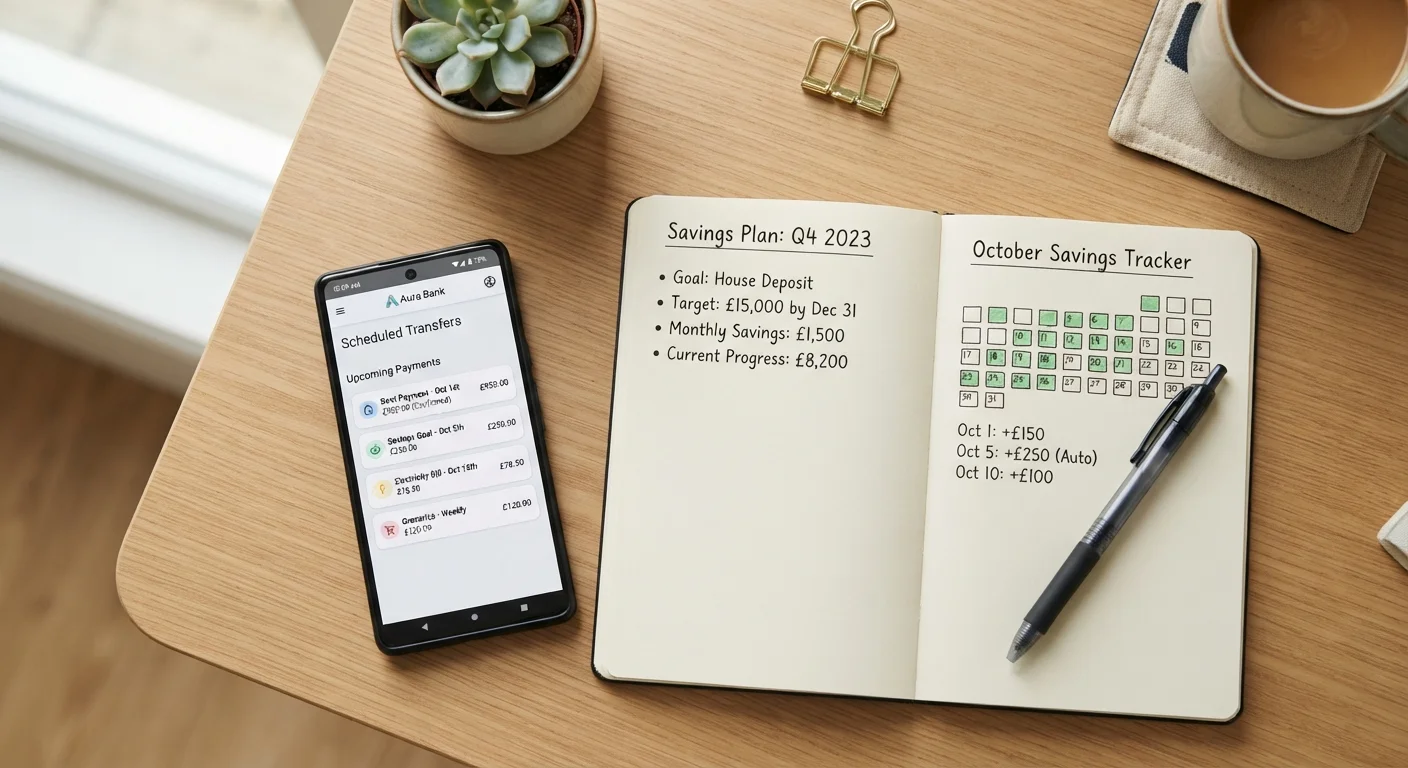
Why Automation Works Where Willpower Fails
Most people already know they should save more and pay down debt faster. The gap between knowing and doing is rarely a knowledge problem - it's a behavioral one. Every time you manually move money to savings, you're competing with dozens of other mental demands and emotional triggers that make it easy to skip or delay.
Automation solves this by removing the decision entirely. When your bank moves $100 to savings the morning after every paycheck, you never see it sitting in checking. You never weigh it against tonight's dinner plans. It's simply gone - in the best possible way.
Research in behavioral economics consistently shows that people save more when saving is the default, not the deliberate choice. This is the same principle behind employer-matched 401(k) auto-enrollment: when employees are automatically enrolled, participation rates rise dramatically. You can apply the same logic to every financial goal you have.
If you've noticed that your savings balance never seems to grow despite good intentions, our look at why savings strategies stall identifies patterns that automation directly addresses. And if you're weighing whether to save or pay off debt first, see our guide to tackling both simultaneously.
What You Need Before You Start
Setting up automation is genuinely simple, but a few things should be in place first so your transfers don't create overdraft fees or confusion.
What you will need
Start Smaller Than You Think You Need To
The most common automation mistake is setting transfers too high and then canceling them during a tight month. Starting with an amount that feels almost too easy - $20 or $30 per paycheck - builds the habit without stress. Increase amounts gradually by $10-$25 every few months as you adjust.
Step-by-Step: Setting Up Your Automated System
Follow these steps in order. Each one builds on the last, so resist the urge to skip ahead.
Calculate your safe-to-automate amount
Before scheduling any transfer, determine how much you can move without risking overdrafts. Add up your fixed monthly expenses - rent, utilities, insurance, minimum debt payments - and subtract from your monthly take-home pay. The remainder is your discretionary cushion. Start by automating just 10-15% of that cushion toward savings. You can always increase it later.
Open a dedicated savings account if you don't have one
Keeping savings in a separate account - ideally at a different institution than your checking - adds a small friction barrier that discourages casual withdrawals. Many banks and credit unions allow you to open a savings account online in minutes. Look for an account with no monthly fee and no minimum balance requirement. A high-yield savings account can help your balance grow faster, though interest rates vary and are not guaranteed.
Schedule your savings transfer for the day after payday
Log into your bank's online portal or app and set up a recurring transfer from checking to savings. Set the transfer date to the day after your paycheck typically lands. This is the core mechanic behind paying yourself first - savings leave before you have a chance to spend them. Even $25 or $50 per paycheck is a meaningful starting point.
Automate minimum payments on all debts
Log into each creditor's website - credit cards, student loans, auto loans - and enroll in autopay for at least the minimum payment. This ensures you never miss a due date, protecting your credit score and avoiding late fees. Set autopay to draw from your checking account a few days before the actual due date to account for processing time.
Add a separate automated extra debt payment
Once minimums are covered automatically, set up a second, separate recurring transfer specifically for extra debt repayment. Direct it toward your highest-interest debt first - this approach, sometimes called the avalanche method, reduces total interest paid over time. Even an additional $30-$50 per month compounds meaningfully over a multi-year loan term. You can also revisit our starter's roadmap for saving and debt if you're still deciding which debt to prioritize.
Keeping Your Automation Working Over Time
Automation isn't truly set-and-forget. Life changes - income shifts, expenses rise, debts get paid off - and your automated system should reflect your current situation, not the one you had when you first set it up.
Schedule a short quarterly check-in, perhaps 15 minutes, to review each automated transfer. Ask: Has my income changed? Have any debts been paid off, freeing up cash I can redirect? Is my emergency fund fully funded, meaning I should shift that transfer toward another goal?
If you find your checking account running low before the next paycheck, don't cancel the automation - adjust the amount down slightly instead. A smaller consistent transfer beats an irregular large one every time. You can also explore how round-up savings compare to scheduled transfers if you want a complementary approach.
Watch out for habits that quietly work against your progress. Our overview of financial habits that undermine goals pairs well with any automation setup. For broader money management structure, explore budgeting basics to align your spending plan with your automated savings.
This article provides general financial information and education. It is not personalized financial, tax, or investment advice. Consult a qualified financial professional for guidance specific to your situation.
The content provided on our blog site traverses numerous categories, offering readers valuable and practical information. Readers can use the editorial team’s research and data to gain more insights into their topics of interest. However, they are requested not to treat the articles as conclusive. The website team cannot be held responsible for differences in data or inaccuracies found across other platforms. Please also note that the site might also miss out on various schemes and offers available that the readers may find more beneficial than the ones we cover.