

Why Budget Eating Has a Bad Reputation - and Why It Shouldn't
The widespread belief that eating healthily requires premium spending is not well supported by evidence. Research consistently shows that whole grains, legumes, eggs, and many vegetables rank among the most nutrient-dense foods per dollar available in US supermarkets. The real barriers are time, habit, and knowing which trade-offs actually matter.
Many households overspend on food without realizing it - often through patterns explored in our article on why families overspend at the grocery store. The strategies below are designed to work with a realistic schedule and a modest weekly grocery budget, without demanding culinary expertise or sacrificing nutritional balance.
This article provides general nutrition and budgeting information for educational purposes. It is not a substitute for personalized dietary advice from a registered dietitian or qualified healthcare professional.
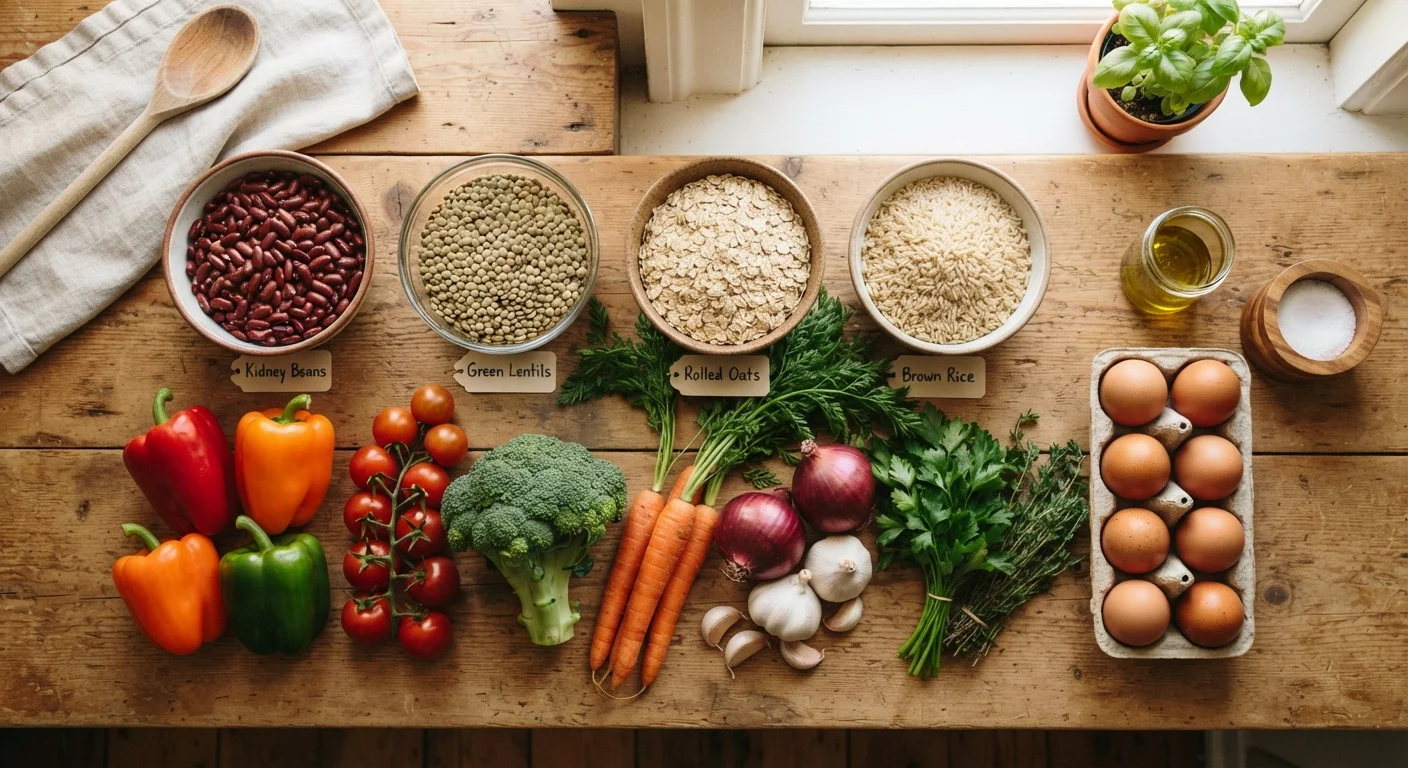
What you will need
Step-by-Step: Building a Budget-Friendly, Nutritious Grocery Approach
The steps below build on one another. You don't need to implement all of them at once - start with two or three that fit your current routine and add others as they become habit.
Anchor your cart around inexpensive protein staples
Dried or canned beans, lentils, chickpeas, eggs, canned fish (such as tuna or sardines), and plain Greek yogurt deliver substantial protein and micronutrients at a fraction of the cost of most meat options. Build at least half your weekly meals around one or more of these staples.
Dried legumes cost significantly less per serving than canned but require soaking and longer cooking. Canned versions are a reasonable convenience trade-off - just rinse them to reduce sodium content.
Choose whole grains over refined or heavily processed options
Brown rice, oats, whole wheat pasta, and barley are inexpensive, filling, and nutritionally superior to their refined counterparts. They also have longer shelf lives, which reduces spoilage waste. A large container of rolled oats, for example, provides weeks of breakfasts at very low per-serving cost.
Prioritize frozen and canned vegetables
Frozen vegetables are typically harvested and frozen at peak ripeness, which preserves most of their nutritional value. Research published by food scientists consistently shows that frozen spinach, broccoli, peas, and corn are nutritionally comparable to fresh. They also eliminate spoilage, which is one of the leading sources of food budget waste.
Canned tomatoes, pumpkin, and corn are similarly cost-effective. Choose low-sodium or no-salt-added versions when available, or rinse before using.
Plan your meals before you shop
Shopping without a plan is one of the most reliable ways to overspend and under-nourish. Before going to the store, decide on three to five dinners for the week, identify shared ingredients, and build your list from there. This practice reduces impulse purchases and ensures that what you buy gets eaten.
For a practical framework on building this habit, see our guide to weekly meal planning.
Compare unit prices and default to store brands
Unit price labels (cost per ounce, per pound, or per count) are displayed on most US grocery store shelves and are the most reliable way to compare value between package sizes and brands. Store-brand or generic products frequently match name-brand quality at 20-40% lower cost, particularly for staples like oats, canned goods, frozen vegetables, and cooking oils.
Limit ultra-processed convenience items
Pre-packaged meals, snack foods, and heavily processed items tend to be both more expensive per serving and lower in nutritional quality than whole-food alternatives. Redirecting even a portion of that spending toward whole grains, legumes, and vegetables typically improves both the nutritional profile and the budget simultaneously.
This doesn't require eliminating convenience foods entirely - it means being intentional about which ones earn a place in the cart. For more on how food environment and habits shape dietary quality, see our article on nutrition myths and what the evidence shows.
Batch Cooking Saves Both Time and Money
Cooking large quantities of a staple - such as a pot of lentil soup or a sheet pan of roasted vegetables - once or twice a week dramatically reduces the temptation to order takeout on busy evenings. Portioning and refrigerating meals in advance keeps nutritious food immediately accessible when time is short. This habit pairs especially well with a weekly meal planning routine.
Common Pitfalls and How to Avoid Them
Even well-intentioned shoppers run into predictable traps. Buying in bulk saves money only if the food actually gets used - perishables purchased in large quantities often end up wasted, which erases any savings. Similarly, "health food" marketing can lead consumers to overpay for products that offer no meaningful nutritional advantage over standard alternatives.
Another common issue is letting variety slip. Eating the same few cheap foods repeatedly can lead to nutritional gaps over time. Rotating your protein sources (eggs one week, canned tuna another, lentils the next) and varying your vegetables keeps meals balanced without adding much cost. For a deeper look at how subtle habits affect dietary quality, see our piece on habits that quietly undermine an otherwise decent diet.
Avoid Drastic Restrictions in the Name of Saving
Cutting food spending too aggressively - by skipping entire food groups or relying on only one or two foods - can create nutritional deficiencies over time. Budget eating should focus on shifting to more cost-effective whole foods, not on eliminating variety. If you have specific health conditions or dietary needs, consult a registered dietitian before making significant changes to your eating pattern.
Connecting Budget Habits to Broader Financial Health
Consistent grocery savings compound meaningfully over time. Reducing a household food bill by even a modest amount each week adds up to hundreds of dollars annually - money that can go toward an emergency fund, debt repayment, or other priorities. Our guide on small daily money habits that quietly compound illustrates how this kind of incremental progress builds real financial resilience.
Budget-conscious eating also pairs naturally with weekly meal planning, which reduces decision fatigue, cuts down on last-minute takeout spending, and helps households use what they buy before it spoils. The two habits reinforce each other in ways that are hard to replicate through any single strategy alone.
The content provided on our blog site traverses numerous categories, offering readers valuable and practical information. Readers can use the editorial team’s research and data to gain more insights into their topics of interest. However, they are requested not to treat the articles as conclusive. The website team cannot be held responsible for differences in data or inaccuracies found across other platforms. Please also note that the site might also miss out on various schemes and offers available that the readers may find more beneficial than the ones we cover.