

Why the First Minutes Matter Most
A car accident can happen in seconds, but the decisions you make in the minutes that follow have lasting consequences - for your physical safety, your legal standing, and your insurance claim. Disorientation, adrenaline, and shock are all normal reactions, which is why it helps to have a clear mental plan before an accident ever occurs.
Most drivers will be involved in at least one collision during their lifetime. Understanding the proper sequence of actions keeps you safer at the scene and avoids costly mistakes, such as admitting fault prematurely or failing to document critical evidence.
What you will need
Step-by-Step: What to Do at the Scene
Follow these steps in order. If you are injured and cannot complete all of them, prioritize calling for emergency help above everything else.
Check for Injuries and Call 911
Before anything else, assess yourself and your passengers for injuries. If anyone is hurt - or if you are unsure - call 911 immediately. Do not attempt to move an injured person unless they are in immediate danger, such as from fire or oncoming traffic. Emergency dispatchers can guide you while help is on the way.
Move to a Safe Location
If the vehicles are drivable and it is safe to do so, move them out of active traffic lanes - to a shoulder, parking lot, or side street. Turn on your hazard lights immediately. If the cars cannot be moved, exit the vehicle carefully and move to a safe distance from traffic, ideally behind a guardrail or barrier.
Exchange Information with Other Drivers
Approach the other involved driver calmly and exchange contact, license, and insurance details. Remain polite and composed. This is not the moment to assign blame or recount your version of events - simply gather the necessary information.
Document the Scene Thoroughly
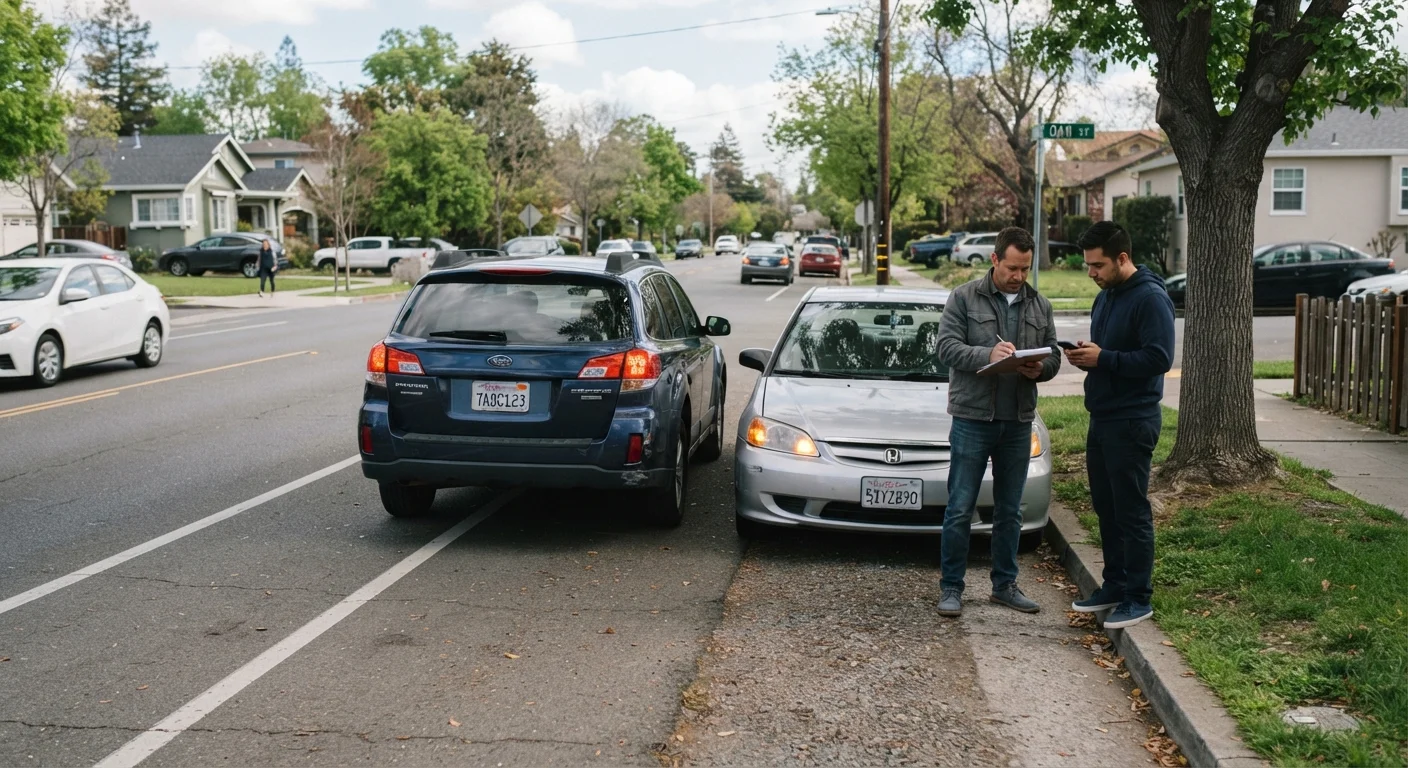
Use your phone to photograph all vehicles from multiple angles, capturing damage, license plates, and the broader scene including road signs and conditions. Take note of the time, location, weather, and direction each vehicle was traveling. Write down what happened while it is fresh in your memory.
Cooperate with Law Enforcement
When officers arrive, provide a factual, honest account of what you observed. Answer questions clearly and avoid speculating about details you are unsure of. Request the responding officer's name and badge number, and ask how to obtain a copy of the official police report - you will typically need it for your insurance claim.
Documenting Damage and Gathering Information
Once it is safe to do so, thorough documentation is one of the most valuable things you can do for a future insurance or legal process. Use your smartphone camera to capture every angle of all vehicles involved, any visible injuries, road conditions, skid marks, traffic signs, and the surrounding scene.
When exchanging information with other drivers, collect the following:
- Full legal name and contact number
- Driver's license number and issuing state
- License plate number
- Insurance company name and policy number
- Vehicle make, model, and year
If there are witnesses, politely ask for their name and phone number - their account may be important later. Do not discuss fault, apologize, or make statements about what happened to anyone other than responding law enforcement officers.
Use a Notes App for Accuracy
Immediately after the accident, open your phone's notes app and type a brief account of exactly what happened - direction of travel, estimated speeds, traffic signals, and any other relevant details. Memory fades quickly after stressful events, and a timestamped note can support your insurance claim or legal case if details are later disputed.
After You Leave the Scene
Even if you drove away from the accident under your own power, your responsibilities are not finished. Contact your insurance company as soon as reasonably possible to report the incident - most policies require prompt notification as a condition of coverage. Provide the facts as you know them without speculating about fault.
Seek a medical evaluation, ideally within 24 to 48 hours, even if you have no obvious injuries. Conditions like whiplash, concussions, and internal soft-tissue injuries often do not produce noticeable symptoms until hours or days after a crash. A timely medical record also strengthens any future personal injury claim if one becomes necessary.
Keep all paperwork related to the accident in one place: the police report number, medical visit records, repair estimates, and correspondence with your insurer. Consulting a licensed attorney is advisable if there are injuries, significant property damage, or any dispute about fault.
This article provides general safety and procedural information only and does not constitute legal or insurance advice. Consult a qualified attorney or licensed insurance professional for guidance specific to your situation.
The content provided on our blog site traverses numerous categories, offering readers valuable and practical information. Readers can use the editorial team’s research and data to gain more insights into their topics of interest. However, they are requested not to treat the articles as conclusive. The website team cannot be held responsible for differences in data or inaccuracies found across other platforms. Please also note that the site might also miss out on various schemes and offers available that the readers may find more beneficial than the ones we cover.